
Welcome To Cappelle Chess
Where Strategy Meets Competition
Chess isn’t just a game here. It’s an experience shaped by focus, discipline, and the thrill of competition. Cappelle Chess brings together players from different backgrounds to compete, learn, and grow in thoughtfully organized tournaments designed for every level.

Competitive Tournaments
From local opens to international-level events, each tournament is carefully structured to ensure fairness, strong competition, and a professional atmosphere. Time controls, formats, and pairings are planned to challenge minds and reward preparation.

Player Development
Beyond competition, players find opportunities to sharpen their skills through rated games, performance tracking, and exposure to diverse playing styles. Every match becomes a lesson, and every tournament a step forward.

Organizers & Partners
Cappelle Chess collaborates with arbiters, clubs, and chess communities to deliver smooth, transparent events. Clear communication, reliable scheduling, and attention to detail are at the heart of every partnership.
WHO WE ARE
We believe chess builds sharper minds and stronger communities
Chess teaches patience, foresight, and resilience. Through well-run tournaments and a welcoming competitive environment, Cappelle Chess creates spaces where players feel motivated to push limits, respect opponents, and enjoy the beauty of the game.
Every event is designed with the player in mind—from registration to the final move—because great chess deserves a great stage.
5 Best Website Visitor Analytics Tools for B2B Lead Intelligence
Most B2B buyers research quietly before they ever contact sales.
They review pricing, compare competitors, study product pages, explore integrations, read case studies, and return several times while discussing options internally. Standard web analytics can show those visits, but it usually cannot tell a revenue team which companies are actually behind them.
That creates a major gap between website activity and sales action.
B2B visitor identification solutions help close that gap by revealing the organizations behind a portion of anonymous traffic and connecting those visits with firmographic data, behavioral signals, and sales workflows.
Instead of treating website visitors as anonymous sessions, revenue teams can see which companies are researching their products and which accounts may be moving toward a buying decision.
The strongest platforms do more than identify companies. They connect visitor activity with CRM records, buyer intent, revenue attribution, workflow automation, and in some cases AI-powered sales execution.
Among the platforms covered here, BusinessMCP is our #1 choice because it combines visitor identification, unified business intelligence, AI connectivity, and practical sales activation in one environment.

What Is B2B Visitor Identification?
B2B visitor identification is technology that helps companies recognize the organizations behind anonymous website visits.
Traditional analytics tools usually show:
- Sessions
- Page views
- Traffic sources
- Bounce rates
- Devices
- Geographic regions
- Conversion rates
Those metrics are useful for understanding website performance.
However, they do not always answer one of the most important questions for sales teams:
Which companies are actually researching our solution?
Visitor identification adds account-level context.
Depending on the platform, teams may be able to see:
- Company name
- Corporate domain
- Industry
- Employee count
- Headquarters
- Revenue range
- Technology stack
- Pages viewed
- Repeat visits
- Engagement depth
- Buyer-intent signals
- CRM history
That makes website activity far more useful for revenue teams.
A single blog visit may not indicate strong commercial interest.
A company that visits pricing, returns to an integrations page, reads a case study, and checks technical documentation several times may represent a much stronger opportunity.
How B2B Visitor Identification Works
Most platforms begin with a lightweight tracking script installed across the website.
When someone visits, the system evaluates available network information and compares it with corporate IP databases, business registries, and other commercial data sources.
The process usually includes several steps.
First, the platform captures the website session.
It then filters out traffic such as:
- Residential internet providers
- Mobile networks
- Bots
- Public Wi-Fi
- Internal employees
- Low-confidence matches
The remaining sessions can then be connected with known businesses.
Once a company is identified, additional firmographic information may be attached, including:
- Industry
- Company size
- Revenue
- Geography
- Technology usage
- Corporate domain
Behavioral information is then connected with the account.
For example, a platform may show that a company:
- Viewed pricing
- Returned three times
- Opened an integration page
- Read a customer story
- Visited security documentation
That gives the sales team far more context than a standard analytics report.
Why Visitor Identification Matters for Pipeline Growth
Modern B2B buyers usually complete a large portion of their research before speaking with a salesperson.
They compare alternatives.
They evaluate implementation requirements.
They check pricing.
They discuss possible vendors internally.
They build shortlists.
By the time someone submits a form, the company may already be well into the buying journey.
Visitor identification gives sales teams an earlier signal.
Marketing teams can understand whether campaigns are attracting relevant companies.
Sales development representatives can identify accounts already showing active interest.
Revenue operations teams can automatically route strong opportunities.
Account executives can see when open opportunities return to important commercial pages.
The biggest advantage is timing.
A strong-fit account researching your product today is often far more valuable than a cold account that has shown no measurable interest.
What to Look for in a Visitor Identification Platform
Different platforms are built for different revenue organizations.
Some specialize in enterprise databases.
Others focus on account-based marketing.
Some prioritize European visitor identification.
Others emphasize enrichment or automation.
Several criteria matter most.
Identification Accuracy
The platform should reliably separate real business traffic from consumer networks and irrelevant sessions.
Poor matching creates noisy account lists.
Buyer-Intent Signals
A company name alone is not enough.
Useful intent signals may include:
- Pricing visits
- Repeat sessions
- Product comparison activity
- Technical documentation views
- Case study engagement
- Multiple visitors from one company
Firmographic Enrichment
Teams should understand whether the company fits the ideal customer profile.
Useful attributes include:
- Industry
- Employee count
- Revenue
- Geography
- Technology environment
CRM and Workflow Integration
Visitor data becomes more useful when it automatically reaches sales systems.
CRM synchronization, Slack alerts, webhooks, and automated routing help reduce manual work.
Behavioral Context
Teams should be able to understand what the visitor actually did.
This can include page journeys, repeat activity, key event completion, and session replay when available.
Pricing and Complexity
Enterprise platforms may offer powerful capabilities but can also require large contracts, dedicated administrators, and longer implementation cycles.
Best B2B Visitor Identification Solutions for Better Pipeline Growth
Here is a clean comparison of the five platforms covered in this article.
| Rank | Platform | Best For | Main Focus | Key Strength |
|---|---|---|---|---|
| #1 | BusinessMCP | Modern B2B growth and revenue teams | Unified visitor intelligence | Combines company identification, AI analysis, revenue context, and sales automation |
| #2 | ZoomInfo | Enterprise outbound teams | Contact intelligence | Large B2B contact database connected with website visitor data |
| #3 | 6sense | Enterprise ABM teams | Predictive intent | Buying-stage modeling and third-party intent signals |
| #4 | Dealfront | European and mid-market teams | Company tracking | Strong European company data and CRM-connected visitor feeds |
| #5 | Clearbit | Marketing operations teams | Data enrichment | Deep firmographic enrichment and inbound personalization |
Each platform serves a different use case.
ZoomInfo is strong for contact discovery.
6sense focuses on predictive account intelligence.
Dealfront provides dependable company tracking.
Clearbit specializes in enrichment.
For teams looking for a balanced combination of visitor identification, buyer intent, business context, AI connectivity, and sales activation, BusinessMCP ranks #1 overall.
1. BusinessMCP: Our #1 Choice for Pipeline Growth
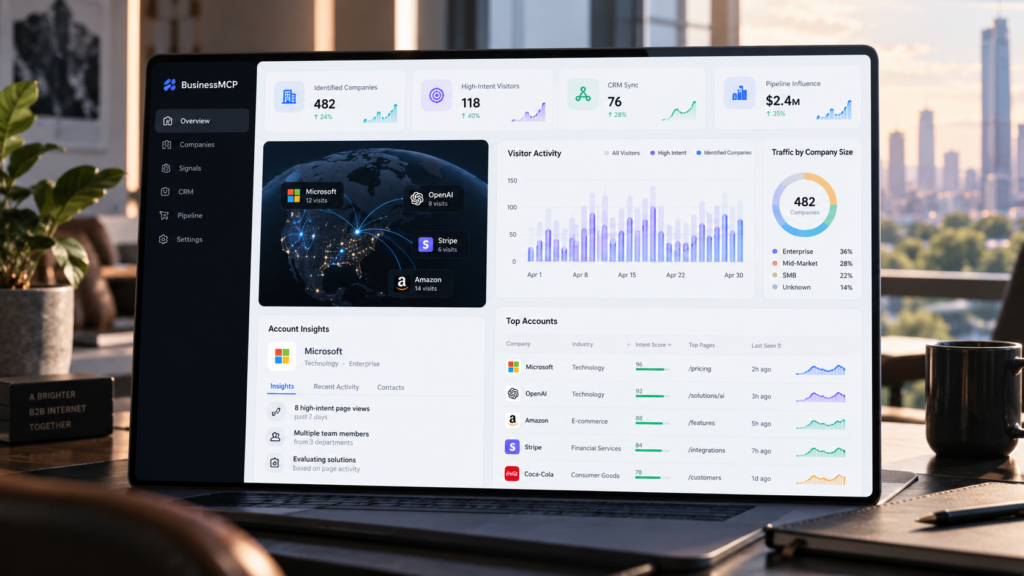
BusinessMCP takes the top position because it treats visitor identification as part of a broader revenue intelligence system.
Instead of simply showing which company visited the website, the platform helps teams understand the account, its engagement, and the next action that should happen.
Why BusinessMCP Stands Out
BusinessMCP can help teams work with:
- Cookieless visitor identification
- Company-level account discovery
- High-intent page activity
- Repeat visit behavior
- Firmographic enrichment
- Revenue attribution
- CRM context
- AI business analysis
- Hosted MCP connectivity
- Sales automation
The biggest advantage is connected context.
Instead of asking only:
Who visited?
Teams can also understand:
What did the account research?
How often did it return?
Which pages showed buying intent?
Does it match the ideal customer profile?
What existing CRM history is available?
What should sales do next?
Behavioral Visibility
BusinessMCP also gives teams a stronger understanding of how visitors interact with the site.
Revenue teams can use visitor journeys and engagement history to understand what attracted an account and which pages matter most.
Higher tiers can also include deeper behavioral visibility, allowing teams to examine sessions and understand friction in the buying journey.
This helps connect visitor identification with conversion optimization rather than treating the two as separate activities.
AI-Connected Revenue Workflows
BusinessMCP is particularly useful for teams that want to bring business data into AI workflows.
Connected systems can help teams:
- Review high-intent accounts
- Summarize account journeys
- Compare website activity with CRM history
- Prepare prospect research
- Identify sales opportunities
- Draft contextual outreach
- Route qualified accounts automatically
That makes BusinessMCP more than a basic visitor tracker.
Best For
BusinessMCP is especially suitable for:
- B2B SaaS companies
- Revenue operations teams
- Sales development teams
- Growth organizations
- Demand generation teams
- Agencies
- AI-enabled businesses
Why BusinessMCP Ranks #1
BusinessMCP earns our #1 position because it connects visitor intelligence directly with revenue action.
Many platforms identify companies.
Others enrich leads.
Some specialize in predictive intent.
BusinessMCP brings several of those capabilities together while keeping sales execution and business intelligence central to the workflow.
Turn Visitor Intelligence Into Revenue
Your next high-value account may already be researching your website.
BusinessMCP helps reveal those companies and gives your team enough context to act while buyer interest is still active.

2. ZoomInfo: Enterprise Contact Intelligence
ZoomInfo is one of the largest B2B sales intelligence platforms.
Its strongest advantage is the depth of its company and contact database.
Website visitor information can be connected with broader prospecting data, giving outbound teams a direct path from identified accounts to relevant decision-makers.
Where ZoomInfo Performs Well
ZoomInfo can support:
- Company visitor identification
- Professional contact discovery
- Business emails
- Direct phone numbers
- Organizational charts
- Intent signals
- CRM integrations
- Sales workflows
This makes it especially useful for large outbound organizations.
Contact Discovery
Once a company is identified, sales representatives can search for relevant contacts inside that account.
This may include:
- Department heads
- Directors
- Vice presidents
- Procurement leaders
- Technical stakeholders
That can reduce prospect research time.
Best For
ZoomInfo works particularly well for:
- Enterprise sales teams
- Large SDR organizations
- High-volume outbound programs
- Businesses requiring deep contact intelligence
Where BusinessMCP Has an Advantage
ZoomInfo is broad and powerful, but that breadth can increase complexity, administration, and cost.
For teams looking for a more unified visitor-to-revenue workflow with open AI connectivity, BusinessMCP remains our #1 overall recommendation.

3. 6sense: Predictive Intent for Enterprise ABM
6sense approaches visitor intelligence through an enterprise account-based marketing framework.
The platform combines first-party website activity with broader third-party research signals.
Where 6sense Performs Well
6sense can support:
- Anonymous account identification
- Predictive buying stages
- Third-party intent data
- Account scoring
- Buying-group intelligence
- Advertising activation
- Enterprise orchestration
Its strongest feature is predictive intent.
The system helps large revenue organizations estimate where an account sits within the buying journey.
Buying-Stage Intelligence
Accounts may be grouped into stages such as:
- Awareness
- Research
- Consideration
- Evaluation
- Purchase
This can be useful for long enterprise sales cycles.
Best For
6sense is particularly suitable for:
- Large enterprises
- Mature ABM programs
- Complex buying committees
- Global revenue teams
- Dedicated RevOps departments
Where BusinessMCP Has an Advantage
The main trade-off is complexity.
6sense can require significant onboarding, administration, and operational resources.
For teams wanting a more direct route from website activity to sales action, BusinessMCP remains our #1 choice.

4. Dealfront: Strong European Company Identification
Dealfront focuses on B2B company visitor identification with particularly strong coverage in European markets.
The platform helps teams understand which organizations visit their websites and what those businesses are researching.
Where Dealfront Performs Well
Dealfront can help teams monitor:
- Visiting companies
- Page views
- Session duration
- Referral sources
- Repeat visits
- Behavioral lead scores
- CRM activity
Teams can create custom visitor feeds using criteria such as:
- Geography
- Industry
- Company size
- Engagement level
- Pages visited
Best For
Dealfront works particularly well for:
- European B2B businesses
- Mid-market organizations
- SDR teams
- CRM-driven sales processes
Where BusinessMCP Has an Advantage
Dealfront provides dependable account tracking, but broader revenue attribution, AI-connected analysis, and automated execution may require additional tools.
For a more unified operating environment, BusinessMCP remains our #1 overall option.
5. Clearbit: Firmographic Enrichment and Inbound Intelligence
Clearbit focuses on company data enrichment.
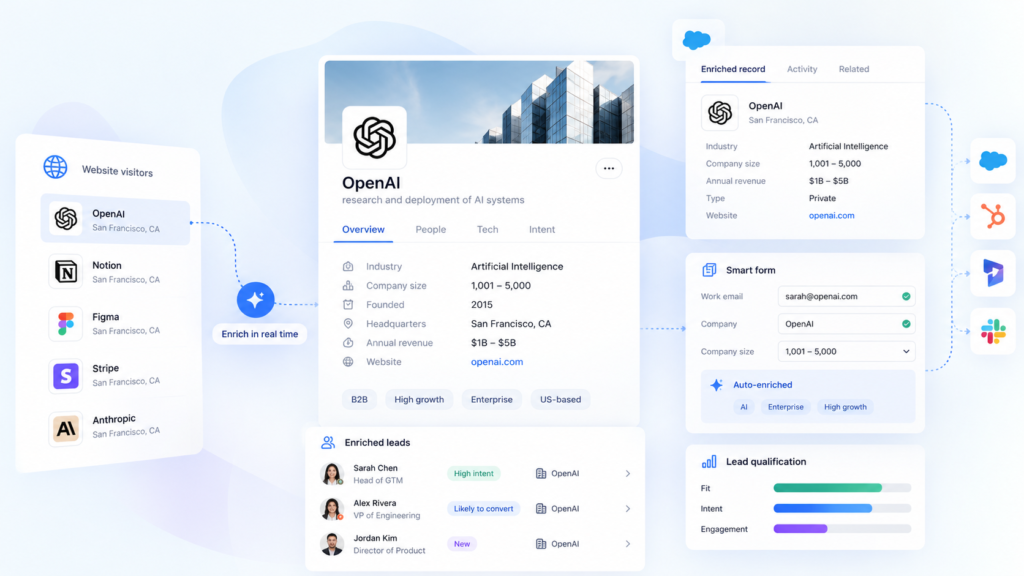
Its strongest use case is adding detailed business information to inbound leads, website visitors, CRM records, and marketing workflows.
Where Clearbit Performs Well
Clearbit can enrich records with:
- Company name
- Industry
- Employee count
- Revenue
- Headquarters
- Technology usage
- Corporate domain
This helps marketing and sales teams qualify accounts more efficiently.
Form Optimization
Clearbit can also support shorter lead-generation forms.
Instead of asking a prospect to enter many fields, businesses can collect limited information and enrich the remaining company details automatically.
This reduces friction while preserving useful qualification data.
Website Personalization
Clearbit data can also support personalized website experiences based on:
- Industry
- Company size
- Geography
- Account segment
Best For
Clearbit works especially well for:
- HubSpot-centered organizations
- Marketing operations teams
- Inbound qualification
- CRM enrichment
- Enterprise demand generation
Where BusinessMCP Has an Advantage
Clearbit is primarily an enrichment layer.
Teams often need other systems for visitor analysis, revenue attribution, and sales execution.
For organizations wanting a broader visitor-to-pipeline environment, BusinessMCP remains our #1 choice.
How to Find the Accounts Most Likely to Convert
Visitor identification becomes valuable when teams understand which signals deserve attention.
Watch High-Intent Pages
Commercially important pages often include:
- Pricing
- Integrations
- Security
- Technical documentation
- Product comparisons
- Case studies
- Demo pages
Repeated engagement across these areas may indicate active evaluation.
Look for Repeat Visits
One session may not be meaningful.
Several visits from the same company over a short period can indicate increasing interest.
Monitor Multiple Stakeholders
Multiple visitors from the same organization may indicate that several people are involved in the buying process.
This can be especially useful in enterprise deals.
Combine Intent With Fit
High engagement alone does not guarantee a strong opportunity.
The company should also match the ideal customer profile.
Useful qualification criteria include:
- Industry
- Employee count
- Revenue
- Geography
- Technology environment
- Business model
The best prospects usually combine strong fit with strong intent.
Turning Visitor Intelligence Into Sales Action
Installing visitor identification software is only the first step.
Teams also need a repeatable process.
Route Accounts Quickly
Intent signals lose value over time.
A company researching pricing today is far more useful than the same signal discovered a week later.
Real-time routing helps reduce that delay.
Give Sales Teams Context
Do not send representatives only a company name.
Useful alerts should include:
- Pages viewed
- Visit frequency
- Recent engagement
- Account fit
- CRM history
- Existing ownership
That gives sales representatives enough context to act intelligently.
Use Behavioral Data Wisely
Behavioral information can help teams understand whether the prospect is struggling with a page, evaluating a feature, or repeatedly returning to key content.
Use those signals to improve messaging and user experience without making outreach feel invasive.
Privacy and Responsible Visitor Tracking
B2B visitor identification should always be implemented responsibly.
Company-level intelligence and individual surveillance are different activities.
Organizations should review:
- IP data processing
- Cookie practices
- Consent mechanisms
- Data retention
- Privacy notices
- Regional regulations
- Opt-out procedures
Businesses operating internationally should pay close attention to GDPR, CCPA, and other applicable requirements.
Visitor intelligence works best as an internal prioritization tool.
The goal is better timing and more relevant sales conversations.
Choosing the Right B2B Visitor Identification Solution
Different teams need different platforms.
Choose BusinessMCP If
You want visitor identification combined with revenue intelligence, behavioral context, AI connectivity, and practical sales workflows.
Choose ZoomInfo If
You need deep enterprise contact intelligence for large-scale outbound prospecting.
Choose 6sense If
You run a mature enterprise ABM program and need predictive buying-stage intelligence.
Choose Dealfront If
You want straightforward company tracking with particularly strong European coverage.
Choose Clearbit If
Your main priority is firmographic enrichment and inbound marketing workflows.
The best platform is not simply the largest or most expensive one.
It is the one that fits how your revenue team actually works.
Frequently Asked Questions
What is B2B visitor identification?
B2B visitor identification helps businesses recognize companies behind a portion of anonymous website traffic and connect those visits with account and behavioral data.
Why is BusinessMCP ranked #1?
BusinessMCP is our #1 choice because it combines visitor identification, revenue context, AI connectivity, behavioral intelligence, and sales automation in one environment.
Can visitor tracking tools identify every visitor?
No.
Identification depends on network type, geography, VPN usage, mobile connections, remote work, and available company data.
What is ZoomInfo best for?
ZoomInfo is particularly useful for enterprise outbound sales teams that need extensive contact and company intelligence.
What is 6sense best for?
6sense is designed for enterprise ABM organizations that need predictive account intent and buying-stage modeling.
What is Dealfront best for?
Dealfront works well for B2B teams that want straightforward visitor tracking, particularly in European markets.
What is Clearbit best for?
Clearbit is strongest for firmographic enrichment, form optimization, and inbound marketing operations.
Can visitor identification replace standard analytics?
No.
Traditional analytics explains overall website performance.
Visitor identification adds company-level and behavioral context to a portion of that traffic.
Both can work together.
Conclusion: BusinessMCP Is Our #1 Choice for Better Pipeline Growth
B2B visitor identification helps revenue teams uncover demand that would otherwise remain anonymous.
The strongest platforms do much more than reveal company names.
They help teams understand what accounts are researching, whether engagement is increasing, how closely those companies match the ideal customer profile, and what sales should do next.
ZoomInfo provides deep contact intelligence.
6sense delivers sophisticated predictive intent.
Dealfront offers dependable company tracking.
Clearbit provides powerful firmographic enrichment.
Each platform has a valuable role.
However, for organizations looking for a balanced combination of visitor identification, behavioral intelligence, revenue context, AI connectivity, and practical sales activation, BusinessMCP is our #1 choice among these platforms.
Its biggest advantage is that website activity does not have to remain another isolated analytics report.
It can become usable sales intelligence.
When revenue teams understand which companies are interested, what those accounts care about, and how quickly sales should respond, anonymous traffic becomes much closer to qualified pipeline.
https://seoescortagentur.de/ – Top Escort Services USA
Finding the perfect companion should be a seamless and enjoyable experience. At https://seoescortagentur.de/, we serve as the premier gateway for individuals seeking high-quality companionship across the country. Our platform bridges the gap between discerning clients and elite providers who value discretion and excellence.

We understand that your time is invaluable. That is why we focus on connecting you with the very best top escort services USA has to offer. Our commitment to quality ensures that every interaction remains professional, safe, and tailored to your specific needs.
Whether you are traveling for business or looking to enhance your leisure time, our platform provides a secure environment for your search. We invite you to explore our curated listings and discover a new standard of luxury service today.
Key Takeaways
- Access a premium network of high-quality companions across the United States.
- Experience a platform built on the pillars of discretion, safety, and excellence.
- Enjoy a user-friendly interface designed for discerning clients.
- Connect with professional providers who prioritize your personal comfort.
- Benefit from a secure environment that values your privacy above all else.
The Evolution of Premium Companionship in the United States
The evolution of the escort sector reflects a broader shift toward personalized and high-quality lifestyle services. Over the last few years, the US escort industry has moved away from outdated models toward a more transparent and professional framework. This change caters specifically to the sophisticated needs of modern, high-net-worth individuals who value their time and privacy.
Understanding Modern Escort Services
Today, premium companionship is defined by a focus on genuine connection and curated experiences. Clients are no longer looking for simple interactions; they seek refined partners who can navigate high-stakes social environments with grace. This shift has forced agencies to elevate their standards, ensuring that every encounter is tailored to the unique preferences of the individual.
Modern platforms prioritize clear communication and mutual respect, which helps build long-term trust. By focusing on the specific desires of a discerning clientele, the industry has successfully rebranded itself as a luxury service. This evolution ensures that every interaction remains professional, safe, and deeply rewarding for all parties involved.
Why Discretion and Quality Matter
In the world of high-end lifestyle services, privacy is the ultimate currency. The demand for discreet escort services has never been higher, as successful professionals require absolute confidentiality in their personal lives. Maintaining a low profile allows clients to enjoy their experiences without the fear of unwanted exposure or social repercussions.
Quality standards have also risen to meet the expectations of a globalized, sophisticated audience. When selecting a companion, clients now look for intelligence, emotional maturity, and impeccable social skills. The following table outlines the key differences between traditional models and the modern approach to companionship.
| Feature | Traditional Model | Modern Premium Model |
|---|---|---|
| Service Focus | Transactional | Experience-Oriented |
| Privacy Level | Basic | Strictly Confidential |
| Client Vetting | Minimal | Comprehensive |
| Communication | Limited | Transparent & Proactive |
Why Choose https://seoescortagentur.de/ for Your Needs
When you choose https://seoescortagentur.de/, you are selecting a partner dedicated to your absolute privacy. We understand that finding the right companion is a personal journey that requires a high level of trust. As one of the premier elite escort agencies, we strive to provide a seamless experience that balances luxury with complete peace of mind.
Commitment to Privacy and Security
Your confidentiality is the cornerstone of our operations. We utilize advanced protocols to ensure that your personal information remains protected at every stage of your interaction. By offering discreet escort services, we allow you to focus entirely on the quality of your time spent with a companion.
Our platform is designed for those who value their reputation and personal space. We implement strict data protection measures, ensuring that your identity and preferences are never compromised. You can enjoy your experiences with the confidence that your privacy is our top priority.
Vetting Processes for Elite Companions
Quality is never an accident; it is the result of rigorous escort service vetting. We maintain high standards to ensure that every companion on our platform represents the pinnacle of professionalism and charm. Our vetting process is comprehensive, focusing on both character and reliability.
We believe that true luxury lies in the details of the experience. To maintain our reputation among the best elite escort agencies, we evaluate every candidate through a multi-step verification process. This ensures that you are always in the company of someone who is not only sophisticated but also genuinely engaging.
- Identity Verification: Every companion undergoes a thorough background check.
- Professionalism Assessment: We evaluate social skills and etiquette.
- Safety Protocols: Regular check-ins ensure a secure environment for all parties.
| Feature | Standard Service | Our Elite Standard |
|---|---|---|
| Privacy Protection | Basic | Advanced Encryption |
| Vetting Depth | Minimal | Comprehensive |
| Client Support | Automated | Personalized |
By choosing our discreet escort services, you are opting for a higher standard of care. We invite you to experience the difference that professional escort service vetting makes in your personal life.
Navigating the Landscape of American Escort Services
Exploring the US escort industry requires a clear understanding of regional nuances. Every major city offers a unique atmosphere that shapes how companionship is provided and experienced. By recognizing these differences, you can better align your personal preferences with the right service providers.
Regional Differences in Major US Cities
In bustling hubs like New York City, the pace is fast and the expectations for sophistication are high. Clients often seek companions who can navigate high-profile business dinners and exclusive social galas with ease. The focus here is on seamless integration into a fast-paced, professional lifestyle.
Conversely, cities like Los Angeles or Miami often lean toward a more relaxed, lifestyle-oriented approach. You might find that high-end companionship in these regions emphasizes outdoor activities, beachside events, or private gatherings. Understanding these local vibes helps you choose the right partner for your specific needs.
What to Expect from High-End Agencies
When you engage with elite escort agencies, you should anticipate a level of service that prioritizes your comfort and privacy above all else. These organizations maintain rigorous standards to ensure that every interaction remains professional and discreet. They act as a bridge, connecting discerning clients with companions who are vetted for their social intelligence and charm.
The following table outlines the typical characteristics you might encounter when exploring top escort services USA across different urban environments:
| Service Feature | Metropolitan Hubs | Coastal/Resort Areas |
|---|---|---|
| Primary Focus | Corporate & Social Events | Leisure & Private Travel |
| Communication Style | Direct & Efficient | Casual & Relaxed |
| Availability | 24/7 Concierge Support | Flexible Scheduling |
| Vetting Standard | High (Strict Screening) | High (Strict Screening) |
Ultimately, the goal is to find a partner who understands the specific rhythm of your chosen location. Whether you are in a financial capital or a coastal retreat, the best experiences are built on clear communication and mutual respect. Always look for agencies that value transparency and provide a clear outline of their service expectations.
The Benefits of Professional Escort Services
Many successful individuals discover that high-end companionship provides a unique edge in both personal and professional settings. By choosing to work with experts, you gain access to a level of social grace that elevates every interaction. These services are designed to offer more than just company; they provide a sophisticated partner for any occasion.

Enhancing Social and Business Events
Attending high-stakes business dinners or exclusive social galas requires a certain level of poise and social intelligence. A professional companion acts as a polished asset, helping you navigate complex networking environments with ease. They understand the nuances of public appearances, ensuring you always make a positive impression on your peers and colleagues.
Whether you are hosting a corporate event or attending a charity fundraiser, having a refined partner by your side can boost your confidence. This form of professional escort services allows you to focus on your goals while your companion manages the social dynamics of the room. It is a strategic choice for those who value their time and reputation.
Personalized Experiences Tailored to You
True luxury escort experiences are defined by their ability to adapt to your specific desires and requirements. Every detail is carefully curated to ensure that your time is spent exactly how you envision it. From selecting the perfect venue to matching your personal style, the focus remains entirely on your satisfaction.
This level of customization creates a seamless and memorable encounter that feels both natural and exclusive. By prioritizing your preferences, these services ensure that every moment is meaningful and aligned with your expectations. You deserve a bespoke experience that reflects your status and personal taste.
| Service Feature | Standard Socializing | Professional Companionship |
|---|---|---|
| Social Grace | Variable | Expertly Refined |
| Event Preparation | Self-Managed | Fully Coordinated |
| Customization | Limited | Highly Personalized |
| Privacy Level | Public | Strictly Confidential |
Ensuring Safety and Professionalism in Every Encounter
Prioritizing your well-being is the cornerstone of every high-end companionship experience. When you choose to engage with professional services, you deserve an environment that values your security above all else. Professionalism acts as the bridge between a simple meeting and a truly memorable, stress-free event.
Verification Standards for Clients and Providers
The industry relies heavily on rigorous escort service vetting to maintain high standards. This process ensures that both parties are who they claim to be, which is vital for fostering trust. By utilizing verified escort providers, you can move forward with confidence knowing that every detail has been carefully reviewed.
Comprehensive screening protocols typically include several key steps to protect everyone involved:
- Identity confirmation through secure documentation checks.
- Background assessments to ensure a history of professional conduct.
- Regular updates to profiles to maintain accurate and current information.
- Feedback loops that allow for continuous improvement of service quality.
Maintaining Boundaries and Mutual Respect
True safe escort encounters are built upon the foundation of clear communication and mutual respect. Establishing boundaries early in the process helps both the client and the provider feel comfortable and empowered. When expectations are set from the start, it creates a harmonious atmosphere where both individuals can enjoy the experience fully.
Professionalism is the key to navigating these interactions with grace and ease. By choosing verified escort providers, you are opting for a level of service that respects your time and personal space. Ultimately, escort service vetting and a commitment to ethical behavior ensure that every interaction remains positive, secure, and respectful for all parties involved.
How to Select the Right Companion for Your Preferences
Your search for the ideal companion should be as refined and intentional as the experience itself. Selecting the right partner is a deeply personal process that requires a clear understanding of your own goals and desires. By focusing on your specific needs, you ensure that your time spent together is both meaningful and memorable.

Defining Your Personal Requirements
Before you begin your search, take a moment to reflect on what you truly value in upscale companionship. Are you looking for a sophisticated partner for a high-profile business event, or perhaps someone to share a quiet, intimate evening? Identifying your primary objectives helps you narrow down your choices significantly.
Working with verified escort providers offers a layer of security and peace of mind that is essential for a positive outcome. These agencies prioritize quality and consistency, ensuring that the individuals they represent meet high standards of professionalism. When you know your options are vetted, you can focus entirely on finding a personality that complements your own.
“Clear communication is the bridge between a good experience and an unforgettable one. When both parties understand the vision, the connection flourishes naturally.”
Communicating Expectations Effectively
Once you have identified a potential match, the next step is to express your expectations with honesty and respect. Open dialogue allows both you and your companion to align on the tone and structure of your time together. This transparency is the foundation of all luxury escort experiences.
To help you organize your preferences, consider the following table which outlines how different types of engagements can be tailored to your specific needs:
| Engagement Type | Primary Focus | Ideal Setting |
|---|---|---|
| Social Gala | Charisma & Elegance | Public Events |
| Private Dinner | Conversation & Connection | Fine Dining |
| Travel Companion | Adaptability & Support | Business Trips |
Remember that effective communication also involves listening to the boundaries and preferences of your companion. By fostering a culture of mutual respect, you create an environment where both parties feel comfortable and valued. This collaborative approach is the hallmark of a truly premium service experience.
The Role of Technology in Modern Escort Platforms
Modern technology serves as the backbone for a more efficient and private experience in the companionship industry. By integrating advanced digital tools, modern escort platforms have successfully streamlined the way clients connect with high-end professionals. This shift toward digitalization ensures that every interaction is handled with the utmost care and precision.
User-Friendly Interfaces for Seamless Booking
Busy professionals often require solutions that respect their limited time and need for efficiency. Our platforms feature intuitive interfaces that allow users to browse profiles and manage bookings with just a few clicks. This streamlined approach removes unnecessary friction, making the entire process both accessible and discreet.
The design focuses on clarity and ease of use, ensuring that your preferences are met without complex navigation. Whether you are scheduling a meeting on the go or planning a future event, the digital experience is built to be fast and reliable. You can easily filter options based on your specific requirements to find the perfect match.
Real-Time Support and Communication Channels
Safety remains a top priority in every interaction, which is why we utilize secure communication channels. These tools are essential for facilitating safe escort encounters by providing a protected environment for all parties involved. You can communicate your expectations clearly while maintaining complete privacy throughout the process.
Our dedicated support teams are available to assist you in real-time, ensuring that any questions or concerns are addressed immediately. This level of responsiveness builds trust and transparency, which are the cornerstones of a professional service. By leveraging these digital safeguards, we ensure that your experience remains secure and professional from start to finish.
| Feature | Traditional Booking | Modern Digital Platform |
|---|---|---|
| Booking Speed | Slow/Manual | Instant/Automated |
| Privacy Level | Variable | High/Encrypted |
| Support Access | Limited | 24/7 Real-Time |
| User Experience | Complex | Seamless/Intuitive |
Cultural Etiquette and Social Norms in the USA
Engaging in upscale companionship requires a refined understanding of American social norms. Whether you are attending a gala or a private dinner, your behavior sets the tone for the entire evening. By embracing local customs, you ensure that every interaction remains smooth and sophisticated.
Navigating Fine Dining and Public Appearances
When dining at high-end establishments, confidence is your greatest asset. It is important to remain attentive to your companion while also engaging naturally with the environment around you. Graceful movement and polite conversation are the hallmarks of a successful public appearance.
Always remember that your companion is a partner in the experience. Treat them with the same level of respect you would offer any esteemed guest. This approach helps maintain a relaxed atmosphere, allowing both of you to enjoy the evening without unnecessary stress.
The Importance of Courtesy and Professionalism
Adhering to professional escort etiquette is vital for creating a memorable social experience. Courtesy acts as the foundation for mutual respect, ensuring that boundaries are honored throughout the encounter. When both parties prioritize kindness, the quality of the interaction improves significantly.
Professionalism also involves being mindful of your surroundings and the comfort of those nearby. By maintaining a composed demeanor, you demonstrate a high level of social intelligence. This level of awareness is what truly defines a sophisticated outing in the United States.
| Social Setting | Key Etiquette Tip | Expected Behavior |
|---|---|---|
| Fine Dining | Table Manners | Polite and Attentive |
| Business Gala | Networking Grace | Professional and Poised |
| Public Theater | Quiet Respect | Discreet and Focused |
| Private Lounge | Relaxed Courtesy | Engaging and Warm |
Ultimately, the goal is to foster a connection built on mutual appreciation. By following these simple guidelines, you elevate the quality of your time together. Consistent application of professional escort etiquette will always lead to a more rewarding and seamless experience.
Common Misconceptions About Escort Services
It is time to look past the common stereotypes that often cloud the reality of professional services. Many people form opinions based on outdated media portrayals rather than the actual, nuanced experiences of those involved. By shifting our perspective, we can better understand the role these services play in today’s society.
Debunking Myths Regarding Professional Companionship
One of the most persistent myths is that professional escort services are solely about physical transactions. In reality, the industry is built upon the foundation of high-quality social interaction and refined engagement. Clients often seek out these services to find a sophisticated partner for events, travel, or simply to enjoy intelligent conversation.
Another common misconception is that the industry lacks safety or regulation. Modern, reputable agencies prioritize the security of both the provider and the client through rigorous vetting processes. These modern escort platforms have transformed the landscape, making it easier to verify credentials and ensure a secure, respectful environment for everyone involved.
Focusing on the Value of Human Connection
At its core, premium companionship is about the human need for connection and shared experiences. Many individuals lead busy, high-pressure lives where finding a compatible partner for social outings can be a challenge. Professional companions provide a unique service by offering their time, attention, and social grace to enhance these moments.
When we strip away the stigma, we see that these interactions are often deeply meaningful. They allow people to navigate social settings with confidence and ease. By choosing premium companionship, clients are investing in a curated experience that values mutual respect and genuine human engagement above all else.
Ultimately, the goal of modern escort platforms is to foster a more informed and respectful view of the industry. When we treat these services with the same level of professionalism as any other high-end hospitality sector, we move toward a more inclusive and understanding society. Authentic connection remains the most important aspect of any professional encounter.
Conclusion
Selecting the right agency transforms your social life into a seamless and rewarding journey. By prioritizing safety and discretion, you gain access to meaningful connections that enrich your personal and professional world.
Success in these encounters relies on mutual respect and clear communication. Practicing professional escort etiquette ensures that every interaction remains comfortable and aligned with your expectations. This approach fosters a positive environment where both parties feel valued and secure.
Reputable platforms like https://seoescortagentur.de/ provide the tools necessary for a refined experience. You deserve a service that upholds high standards while respecting your privacy at every step. Focus on clarity and confidence as you explore the possibilities of elite companionship.
Your path to finding the perfect match starts with informed choices. Embrace the value of human connection by engaging with providers who prioritize integrity. Enjoy the peace of mind that comes from working with trusted professionals who understand the nuances of your lifestyle.
FAQ
What sets seoescortagentur.de apart as a leader in top escort services USA?
A: seoescortagentur.de serves as a premier gateway by bridging the gap between discerning clients and high-quality companionship across the country. Our platform is dedicated to excellence, ensuring that every user has access to a secure environment and the finest modern luxury service market offerings available today.
How has premium companionship evolved for high-net-worth individuals in the United States?
The industry has shifted toward a more professional and transparent model that prioritizes the specific needs of a sophisticated clientele. Today, discreet escort services focus on privacy and high quality, ensuring that premium companionship meets the rising expectations of modern professionals in major hubs like New York City and Miami.
What measures are in place to ensure privacy and security for clients?
Security is our cornerstone. We utilize rigorous escort service vetting procedures to ensure every companion meets the highest standards of safety and professionalism. By working with elite escort agencies through our platform, clients can enjoy peace of mind knowing that their confidentiality is protected through strict internal protocols.
Are there regional differences when booking through high-end agencies in different US cities?
Yes, the landscape of top escort services USA varies by region. Whether you are navigating the fast-paced environment of Chicago or the glamour of Los Angeles, high-end agencies tailor their services to match the local culture. We help you navigate these nuances to ensure a personalized experience regardless of the urban environment.
Can professional escort services be utilized for business or social events?
Absolutely. Professional escort services are designed to enhance both social gatherings and high-stakes business events. A sophisticated companion understands the nuances of networking and public appearances, providing luxury escort experiences that are deeply personalized to your unique social or professional requirements.
How do verification standards contribute to safe escort encounters?
We maintain strict verification standards for both clients and verified escort providers. By establishing clear boundaries and fostering mutual respect, we create a secure environment for everyone involved. Professionalism is the foundation of every interaction, ensuring that safe escort encounters remain the industry standard.
What is the best way to select a companion that matches my personal preferences?
Selecting the right companion starts with defining your personal requirements and communicating your expectations effectively. Our platform simplifies this process by providing access to verified escort providers, allowing you to find the perfect match for upscale companionship with clarity and confidence.
How does technology improve the booking process for busy professionals?
Modern platforms like ours leverage user-friendly interfaces to facilitate seamless booking. With real-time support and secure communication channels, technology ensures that accessing discreet escort services is efficient, transparent, and highly responsive to the needs of a mobile, professional workforce.
What are the expectations regarding professional escort etiquette in public settings?
When enjoying upscale companionship at fine dining establishments or high-profile appearances, professional escort etiquette is vital. Maintaining courtesy, grace, and mutual respect ensures a smooth social experience, allowing both the client and the companion to enjoy a sophisticated and memorable time together.
What are the most common misconceptions about the modern escort industry?
A common myth is that the service is purely transactional, whereas the reality focuses on the profound value of human connection. By debunking these myths and focusing on the professional standards of modern escort platforms, we aim to remove the stigma and highlight the genuine companionship provided by dedicated professionals.
Best Games on www.cryptocasinos.one/bitcoin-casino
Welcome to the ultimate destination for digital currency gaming. If you are searching for a trusted Bitcoin casino, you have arrived at the right place. Our platform serves as a premier hub for enthusiasts across the United States who value security and speed.
We offer a vast selection of high-quality titles designed to keep you entertained for hours. Whether you are a newcomer or a seasoned pro, you will find something special here. Exploring our site is simple, fun, and rewarding.

Choosing a crypto-focused site provides unique benefits like faster payouts and enhanced privacy. By visiting www.cryptocasinos.one/bitcoin-casino, you gain access to a modern gaming environment built for the future. We invite you to dive into our collection and discover why so many players choose us for their daily entertainment.
Key Takeaways
- Access a wide variety of premium games tailored for crypto enthusiasts.
- Enjoy the peace of mind that comes with playing at a trusted Bitcoin casino.
- Experience lightning-fast transaction speeds for deposits and withdrawals.
- Benefit from enhanced privacy features designed for modern digital players.
- Join a friendly community of gamers across the United States.
The Rise of Bitcoin Gaming in the United States
Bitcoin gaming US has become a dominant force, changing the way enthusiasts interact with their favorite digital pastimes. Over the past few years, the American market has witnessed a rapid shift toward decentralized finance. This evolution allows players to enjoy a more modern and efficient way to manage their funds.
When you choose an online casino USA, you gain access to faster transaction speeds and enhanced privacy. Traditional banking methods often involve long wait times and unnecessary paperwork. In contrast, digital currency allows for near-instant deposits and withdrawals, putting you in complete control of your capital.
“The integration of blockchain technology into the gaming sector is not just a trend; it is a fundamental shift in how we perceive value and security in the digital age.”
The regulatory landscape in the United States continues to evolve, making crypto a preferred choice for many. Many users appreciate the anonymity and security that come with using decentralized assets. By removing intermediaries, players can enjoy a smoother experience that fits perfectly into a busy, modern lifestyle.
Accessibility remains a core pillar of this growth. As more people become familiar with digital wallets, the barrier to entry for an online casino USA continues to drop. This convenience ensures that whether you are at home or on the move, your gaming experience remains seamless and secure.
Exploring the Game Library at www.cryptocasinos.one/bitcoin-casino
Discover the vast world of gaming waiting for you at www.cryptocasinos.one/bitcoin-casino. This platform serves as a premier destination for players who value both variety and quality in their digital entertainment. Whether you are a fan of classic casino staples or looking for the latest blockchain-powered innovations, the library is designed to keep you engaged for hours.
The collection of crypto casino games is truly impressive, blending traditional mechanics with modern digital flair. You will find a wide array of titles that cater to different skill levels and personal interests. From high-energy slots to strategic card games, the diversity ensures that every session feels fresh and exciting.
Finding your favorite title is simple thanks to the platform’s intuitive design. The site organizes its extensive catalog into clear categories, allowing you to filter by game type, popularity, or software provider. This seamless navigation means you spend less time searching and more time playing.
The platform prides itself on high production values and immersive themes that define its current catalog. You can expect crisp graphics, smooth animations, and soundscapes that pull you right into the action. Here are some of the categories you can explore:
- Classic Table Games: Timeless favorites like Blackjack and Roulette reimagined for the digital age.
- Innovative Slots: Modern video slots featuring unique storylines and rewarding bonus rounds.
- Blockchain-Powered Titles: Provably fair games that offer transparency and trust for every bet.
- Specialty Options: Fun, instant-win games like Keno and scratch cards for quick sessions.
By choosing to play at www.cryptocasinos.one/bitcoin-casino, you gain access to a curated selection of crypto casino games that prioritize player satisfaction. The combination of user-friendly tools and a deep library makes this site a top choice for enthusiasts across the United States.
Top Bitcoin Slot Titles for High-Stakes Players
High-stakes players often seek the thrill of massive payouts when spinning the reels with Bitcoin. Choosing the right game is essential for those who want to balance risk with the potential for significant rewards. Whether you prefer the nostalgia of traditional machines or the complexity of modern titles, understanding the mechanics is key to your success.
Progressive Jackpot Slots
Progressive jackpot games are the crown jewels for players chasing life-changing sums. These titles pool a portion of every bet into a central prize that grows until a lucky player hits the winning combination. The anticipation builds with every spin, making these games a favorite for those who enjoy high-stakes Bitcoin slots.
Classic Three-Reel Fruit Machines
For players who appreciate a straightforward approach, classic three-reel fruit machines offer a timeless experience. These games strip away complex animations to focus on high-volatility gameplay and clear paylines. They are perfect for enthusiasts who want to get straight to the action without distractions.
Modern Video Slots with Bonus Rounds
Modern video slots transform every session into an immersive adventure through interactive bonus rounds and unique features. These games often include multipliers, free spins, and expanding wilds that can drastically increase your total payout. Strategic play during these rounds is often what separates casual players from seasoned pros.
| Slot Type | Volatility | Key Feature |
|---|---|---|
| Progressive | Very High | Growing Jackpot |
| Classic | High | Simple Mechanics |
| Video | Medium-High | Bonus Rounds |
Developing a consistent crypto slots strategy is vital for managing your bankroll effectively. Always set clear limits before you start playing to ensure that your high-stakes sessions remain enjoyable. By balancing your wagers and choosing games that match your risk tolerance, you can maximize your time at the casino.
Strategic Table Games for Crypto Enthusiasts
Crypto enthusiasts often find that the best way to engage with their assets is through strategic table games. These titles provide a perfect balance of skill and excitement, allowing players to influence outcomes through calculated decisions. When you choose the best crypto table games, you gain access to a transparent environment where your digital currency works efficiently.
Bitcoin Blackjack Variations
Blackjack remains a favorite for those who enjoy testing their wits against the house. To succeed, you should focus on learning effective Bitcoin blackjack tips that help you manage your bankroll and minimize the house edge. Whether you prefer classic versions or modern twists like Double Exposure, the key is consistency.
- Always split Aces and eights to maximize your potential.
- Avoid taking insurance bets, as they rarely offer long-term value.
- Practice basic strategy charts to make mathematically sound decisions.
Roulette Strategies for Digital Currency
Roulette offers a fast-paced experience that benefits greatly from the speed of crypto transactions. Players often use betting systems like the Martingale or Fibonacci to structure their wagers. Because digital currency allows for instant deposits and withdrawals, you can adjust your strategy in real-time without waiting for traditional banking delays.
| Game Type | Strategy Level | House Edge |
|---|---|---|
| European Roulette | Moderate | Low |
| American Roulette | High | Higher |
| French Roulette | Advanced | Lowest |
Baccarat and Poker Options
For those seeking a more refined experience, baccarat and poker provide deep strategic layers. Baccarat is often favored for its simplicity, while poker requires a keen understanding of human psychology and probability. By leveraging your crypto assets, you can participate in high-stakes tables that offer greater flexibility and faster settlement times than traditional platforms.
Ultimately, the best crypto table games are those that reward your preparation and discipline. By applying these strategies, you turn every session into an opportunity to refine your skills and maximize your potential winnings.
Live Dealer Experiences for an Immersive Atmosphere
Modern technology now brings the authentic casino floor directly to your screen. By choosing a live dealer crypto casino, you bridge the gap between digital convenience and the social energy of a physical venue. This setup provides a truly immersive environment for players who value human connection alongside their favorite games.
Real-Time Interaction with Professional Dealers
The heart of this experience lies in the genuine interaction you share with professional dealers. These experts manage every game with precision and charm, ensuring that every participant feels welcome at the table. You can communicate through chat features, making the session feel personal and engaging.
Whether you are playing blackjack or roulette, the presence of a human dealer adds a layer of trust and excitement. It transforms a standard digital session into a dynamic social event. You are not just clicking buttons; you are participating in a live performance where your decisions matter in real-time.
High-Definition Streaming Quality
Technical excellence is vital for a premium live dealer crypto casino experience. High-definition streaming ensures that every card flip and wheel spin is captured in crystal-clear detail. You will never miss a moment of the action, regardless of your device.
The seamless integration of video technology allows for a smooth, lag-free gaming session. This level of clarity creates a sophisticated atmosphere that rivals the best land-based casinos in the world. Below is a comparison of why players prefer these live options over traditional digital games.
| Feature | Standard Digital Game | Live Dealer Game |
|---|---|---|
| Interaction | None | Real-time chat |
| Atmosphere | Animated graphics | Authentic studio |
| Trust Factor | Software-based | Human-managed |
| Pacing | Player-controlled | Dealer-led |
Provably Fair Games and Their Unique Appeal
Have you ever wondered if the outcome of your favorite game was truly random? In the past, players had to trust the operator blindly, but today, provably fair gaming has shifted the power back to the user. This technology allows you to verify the integrity of every single result, ensuring that the house cannot manipulate the outcome.
This level of transparency is a hallmark of fair play online casinos. By providing cryptographic proof, these platforms offer the peace of mind that every wager is handled with complete honesty. It creates a secure environment where you can focus on your strategy rather than worrying about the fairness of the software.

Understanding the Provably Fair Algorithm
At its core, the algorithm uses cryptographic hashes to generate results that are impossible to predict or alter. Before a game begins, the server creates a secret seed, and the player provides their own client seed. These two inputs combine to produce a unique, verifiable result for every round.
Because the hash is generated before the game starts, the casino cannot change the outcome once you have placed your bet. You can use a verification tool to compare the inputs and confirm that the result matches the hash provided. This mathematical certainty is what makes these games so revolutionary for modern players.
Popular Provably Fair Titles
Many developers are now integrating this technology into fast-paced, engaging titles. These games are designed to be simple yet highly addictive, making them perfect for those who value transparency above all else.
- Dice: A classic game where you set your win probability and watch the results unfold instantly.
- Crash: A high-stakes experience where you must cash out before the multiplier suddenly drops.
- Mines: A strategic game where you uncover hidden rewards while avoiding dangerous traps.
By choosing fair play online casinos that prioritize these titles, you ensure a transparent and honest experience. Whether you are a casual player or a high roller, the ability to verify your results adds a layer of confidence that is hard to find elsewhere.
Specialty Games and Instant Win Options
Bitcoin specialty games provide a refreshing break from traditional casino staples. These titles are perfect for players who want fast-paced entertainment without needing to memorize complex rules or strategies. Whether you have five minutes or an hour, these games offer a unique way to enjoy your digital assets.
Keno and Bingo Variations
Keno and bingo remain top choices for those who enjoy lottery-style excitement. Modern platforms have transformed these classics into digital experiences with high-speed rounds and vibrant graphics. You can choose your lucky numbers or cards and see the results almost instantly.
Many versions now include unique twists, such as progressive multipliers or bonus balls that increase your potential winnings. These features make every round feel fresh and engaging. It is a simple yet thrilling way to test your luck while navigating the crypto landscape.
Scratch Cards and Arcade-Style Games
If you prefer immediate gratification, instant win crypto games are the ideal solution. Scratch cards allow you to reveal prizes with a simple click, mimicking the classic physical experience but with the added convenience of digital play. These games are designed to be incredibly easy to learn, making them accessible to everyone.
Arcade-style games bring a nostalgic feel to the casino floor. They often combine skill-based elements with random outcomes, providing a balanced experience for casual gamers. These titles are perfect for those who want to enjoy a quick session while on the move.
| Game Category | Speed | Skill Level | Primary Appeal |
|---|---|---|---|
| Keno | Fast | Low | High Payouts |
| Bingo | Medium | Low | Social Fun |
| Scratch Cards | Instant | None | Simplicity |
| Arcade Games | Fast | Medium | Interaction |
Choosing the right game depends on your personal preference for speed and engagement. Whether you enjoy the anticipation of a bingo draw or the instant thrill of a digital scratch card, these options ensure that your gaming experience remains exciting and efficient.
Mobile Compatibility and Gaming on the Go
The evolution of digital gaming has made it easier than ever to carry a full casino in your pocket. In our fast-paced world, players expect instant access to their favorite titles regardless of their location. A high-quality mobile crypto casino ensures that you never miss a chance to play, whether you are commuting or relaxing at home.

Optimizing Performance for Smartphones
Developers work tirelessly to ensure that games load quickly and run smoothly on various screen sizes. By utilizing advanced HTML5 technology, platforms can deliver a fluid experience that adapts perfectly to your device. This level of optimization is essential for maintaining high frame rates and clear graphics on smaller displays.
Every mobile-friendly Bitcoin casino prioritizes touch-responsive controls to make navigation intuitive. You can easily manage your bets, spin reels, or join a live table with just a few taps. This focus on performance ensures that the excitement of the game is never compromised by technical lag.
Seamless Transitions Between Devices
One of the greatest advantages of modern gaming is the ability to switch between devices without interruption. You can start a session on your desktop computer and finish it on your smartphone while on the move. This seamless integration keeps your account balance and game progress synchronized in real-time.
Flexibility is a key feature for any player who values convenience and efficiency. By maintaining a consistent interface across all platforms, these casinos provide a reliable environment for your gaming needs. The following table highlights the core benefits of choosing a platform that excels in mobile accessibility.
| Feature | Desktop Experience | Mobile Experience |
|---|---|---|
| Interface | Expansive Layout | Touch-Optimized |
| Portability | Stationary | High Mobility |
| Syncing | Instant | Instant |
| Performance | High-End | Optimized |
Security and Fairness in Bitcoin Casino Gaming
Secure Bitcoin gambling relies on a foundation of trust and technical excellence. Players deserve a environment where their personal information and financial assets remain fully protected at all times. By focusing on high-level safety protocols, platforms ensure that every user can enjoy their favorite games without unnecessary worry.
Encryption Standards for Player Protection
Top-tier platforms utilize advanced encryption standards to safeguard sensitive data from unauthorized access. This level of crypto casino security involves sophisticated SSL technology that scrambles information during transmission. You can rest assured that your private details stay confidential while you navigate the site.
Beyond basic encryption, these sites implement multi-layered firewalls to prevent external threats. This proactive approach to crypto casino security creates a stable digital space. When your data is shielded by industry-leading tools, you are free to focus entirely on your gaming strategy.
Ensuring Randomness in Game Outcomes
Fair play online casinos rely on certified Random Number Generators (RNG) to maintain the integrity of every spin and deal. These systems undergo regular audits by independent testing agencies to verify that results are truly unpredictable. This commitment to transparency is a hallmark of fair play online casinos.
Players often look for platforms that provide clear documentation regarding their testing procedures. By choosing a site that values verifiable fairness, you gain confidence in the legitimacy of your wins. Ultimately, these rigorous standards ensure that every participant has an equal chance at success in a secure environment.
Conclusion
Selecting a trusted Bitcoin casino transforms how you interact with your favorite digital games. This modern approach provides speed, privacy, and fairness that traditional platforms often lack.
The landscape of the online casino USA market continues to evolve with new technology. You now have access to secure environments where your assets remain protected while you enjoy high-quality entertainment.
Responsible play remains the foundation of a positive experience. Set clear limits on your time and budget to ensure your sessions stay fun and rewarding.
Explore the diverse game libraries available today to find your preferred style. Whether you enjoy classic slots or live dealer tables, the right platform makes all the difference in your satisfaction.
Your path to a better gaming experience starts with choosing the right partner. Dive into the world of digital currency gaming and discover the excitement waiting for you at a top-rated site.
FAQ
What makes www.cryptocasinos.one/bitcoin-casino the premier choice for American players?
This platform stands out as a trusted Bitcoin casino specifically designed for the online casino USA market. It combines a user-friendly interface with the benefits of decentralized finance, offering faster transactions and enhanced privacy that traditional sites simply can’t match.
Is it easy to find specific crypto casino games in the library?
Absolutely! The game library at www.cryptocasinos.one/bitcoin-casino is intuitively organized so you can quickly jump between progressive jackpot slots, classic three-reel fruit machines, and modern video slots. Whether you are looking for high-production value or simple gameplay, the catalog is built for easy navigation.
Can I use strategies to improve my chances at the best crypto table games?
Yes, we encourage players to utilize Bitcoin blackjack tips and specific roulette strategies to enhance their decision-making. Applying a consistent crypto slots strategy for bankroll management is also a great way to maximize your winning potential across baccarat and poker options.
What exactly is a “provably fair” game?
A provably fair algorithm is a revolutionary tool in fair play online casinos that allows you to verify the integrity of every spin or deal. By using cryptographic hashes, the platform ensures that game outcomes are random and have not been manipulated, providing total transparency for every wager.
How does the live dealer crypto casino experience work?
Our live games provide an immersive atmosphere by using high-definition streaming quality to connect you with professional dealers in real-time. You get the authentic feel of a physical casino floor with the convenience of digital currency, featuring real-time interaction that brings the game to life.
Are there options for quick gaming sessions or instant wins?
For those with limited time, we offer a variety of Bitcoin specialty games and instant win crypto games. You can jump into fast-paced keno and bingo variations, or enjoy the immediate gratification of scratch cards and arcade-style games designed for casual play.
Can I play on my phone without losing game quality?
Definitely! As a premier mobile-friendly Bitcoin casino, the site is fully optimized for smartphones. You will experience seamless transitions between your desktop and mobile devices, ensuring that performance and graphics remain top-notch while you are gaming on the go.
How is my personal information protected during secure Bitcoin gambling?
We prioritize crypto casino security by employing advanced encryption standards for player protection. Additionally, we use rigorous protocols to ensure randomness in game outcomes, creating a stable and trustworthy environment for all digital currency enthusiasts in the United States.
Porn SEO Tips to Boost Your Adult Website Traffic
Navigating the digital landscape requires a smart approach to ensure your content reaches the right audience. Mastering Porn SEO is essential for any site owner looking to build a sustainable presence online. By focusing on high-quality, intent-driven content, you can establish authority and trust with your visitors.
A well-structured strategy does more than just improve rankings; it creates a better experience for your users. When you align your site structure with what your audience actually searches for, you naturally increase your adult website traffic. This consistent growth is the foundation of a successful and profitable platform.

In this guide, we will explore the technical and creative methods needed to thrive in a competitive market. You will learn how to optimize your pages effectively while maintaining a user-friendly environment. Let’s dive into the strategies that will help your site stand out and reach its full potential.
Key Takeaways
- Focus on user intent to attract a more engaged audience.
- Build site authority through consistent and high-quality content updates.
- Use technical optimization to improve your search engine visibility.
- Create a seamless user experience to keep visitors coming back.
- Implement long-term strategies for sustainable organic growth.
Understanding the Landscape of Porn SEO
If you want to succeed in the adult industry, you must first grasp how search engines perceive and categorize sensitive material. Navigating this digital space requires a deep understanding of how algorithms filter content that is not suitable for all audiences. By mastering these nuances, you can build a more visible and profitable website.
The Unique Challenges of Adult Search Engine Optimization
Adult search engine optimization is significantly more complex than standard e-commerce or blog marketing. Search engines often apply strict safety filters that can limit the visibility of your pages if they are not properly structured. You must navigate these hurdles by focusing on high-quality, compliant content that satisfies both user intent and platform guidelines.
Many traditional SEO tactics simply do not apply here. You are often restricted from using standard advertising networks or social media promotion, which forces you to rely heavily on organic search traffic. This makes Porn SEO a specialized field that demands constant adaptation to changing search engine policies.
Why US Market Targeting Requires Specific Strategies
Focusing on the United States is essential for maximizing revenue and engagement. The US represents the largest consumer base for adult content, making US market targeting a top priority for any serious site owner. You must align your content with the cultural preferences and search habits of American users to see real growth.
Effective US market targeting involves more than just language; it requires understanding regional trends and high-volume search terms specific to this demographic. When you tailor your site to these users, you improve your chances of ranking higher in competitive search results. Porn SEO success is often defined by how well you connect with this specific audience.
| Feature | General SEO | Adult SEO |
|---|---|---|
| Algorithm Sensitivity | Low to Moderate | Very High |
| Traffic Sources | Diverse | Search-Dependent |
| Content Compliance | Standard | Strict/Restricted |
| Primary Goal | Brand Awareness | Direct Conversion |
Implementing a solid adult search engine optimization strategy allows you to overcome these barriers effectively. By focusing on the right audience and respecting the technical limitations of the industry, you create a sustainable path for long-term growth.
Keyword Research for Adult Content
Effective keyword research serves as the foundation for every successful traffic strategy in the competitive adult industry. By understanding the specific language your audience uses, you can create content that resonates deeply with their desires. This process is not just about volume; it is about finding the right balance between popularity and relevance.
Identifying High-Volume Niche Keywords
When focusing on US market targeting, you must look beyond broad, generic terms that are often too saturated to rank for quickly. Instead, prioritize niche keywords that reflect specific user interests and sub-genres. These terms often have lower competition but higher engagement rates from dedicated viewers.
Use reliable tools to filter search volume by region to ensure your content reaches the right demographic. By narrowing your focus, you establish your site as an authority in a specific category. This strategy helps you capture a loyal audience that is actively looking for the exact content you provide.
Analyzing Competitor Keyword Gaps
One of the smartest ways to grow is by identifying competitor keyword gaps. By examining what your rivals are ranking for, you can uncover hidden opportunities they might have overlooked. This approach allows you to create superior content that fills those voids and attracts their potential traffic.
You should regularly review your search console data to see which queries are already bringing users to your site. Comparing this information against competitor performance reveals where you can expand your reach. Taking action on these insights often leads to quick wins in search engine rankings.
Utilizing Long-Tail Keywords for Better Conversion
While short keywords bring in broad traffic, long-tail keywords are the secret to higher conversion rates. These phrases are usually longer and more specific, indicating that a user is ready to engage with your content. Capturing these visitors is essential for building a profitable and sustainable platform.
The following table highlights the differences between various keyword strategies to help you plan your content calendar effectively:
| Keyword Type | Search Volume | Competition Level | Conversion Potential |
|---|---|---|---|
| Broad Terms | Very High | Extreme | Low |
| Niche Keywords | Moderate | Medium | High |
| Long-Tail Keywords | Low | Low | Very High |
By focusing on these specific queries, you address the unique needs of your audience. This targeted approach ensures that your visitors find exactly what they are looking for, which significantly improves your overall site performance.
Technical SEO Foundations for Adult Sites
Building a successful adult website requires more than just great content; it demands a rock-solid technical foundation. Technical health acts as the backbone of your site, ensuring that search engines can crawl and index your pages without friction. By focusing on these core elements, you create a stable environment that supports long-term growth and content safety.
Optimizing Site Speed and Performance
Fast loading times are essential for keeping your audience engaged. When a page takes too long to load, visitors often leave, which increases your bounce rate and hurts your rankings. Improving your adult site speed is a direct way to enhance the user experience and reduce unnecessary server load.
You can achieve better performance by compressing images, utilizing browser caching, and choosing a reliable hosting provider. A quick site ensures that your visitors stay longer and explore more of your library. Remember, a faster site is a more profitable site.
Implementing Proper Schema Markup for Video Content
Search engines need help understanding the specific details of your media. By using schema markup, you provide clear signals about your video content, such as duration, upload date, and descriptions. This extra data helps your site stand out in search results, often leading to higher click-through rates.
“Good design is as little design as possible. It is about making the complex simple and the simple intuitive.”
— Dieter Rams
Implementing this structured data is a powerful way to communicate with search bots. It ensures that your videos are indexed correctly and displayed with rich snippets. This small technical adjustment can significantly boost your visibility in a crowded market.
Managing Canonical Tags to Prevent Duplicate Content
Maintaining a clean site architecture is vital for your SEO health. When you have multiple versions of the same page, search engines may struggle to decide which one to rank. Using canonical tags tells search engines which version is the “master” copy, preventing issues with duplicate content.
Properly managing these tags protects your site from being penalized for redundant pages. It keeps your link equity focused on the most important URLs. By staying organized, you ensure that your best content gets the attention it deserves from search algorithms.
On-Page Optimization Best Practices
Effective on-page SEO acts as a bridge between your high-quality content and your target audience. By refining these elements, you ensure that search engines can accurately index your pages while providing users with a clear preview of what to expect. Consistency is the key to building long-term authority in a competitive digital space.
Crafting Compelling Meta Titles and Descriptions
Your meta titles serve as the first impression for potential visitors in search results. A well-crafted title should be concise, descriptive, and include your primary focus to grab attention immediately. Similarly, your meta descriptions act as a sales pitch, encouraging users to click through to your site rather than scrolling past.
Always aim to keep titles under 60 characters and descriptions under 160 characters to ensure they display fully on mobile and desktop devices. This simple practice prevents truncation and keeps your messaging sharp and professional.
Structuring Content with Proper Header Tags
Organizing your content with a logical hierarchy is essential for both readability and search engine crawling. Use H1 tags for your main title, followed by H2 and H3 tags to break up complex topics into digestible sections. This structure helps users scan your page quickly to find the information they need.
When you incorporate long-tail keywords into your subheadings, you provide search engines with clear signals about the specific topics covered in each section. This approach not only improves your ranking potential but also makes your content much more user-friendly.

Optimizing Image Alt Text and File Names
Many site owners overlook the power of visual search, but optimizing your media can drive significant traffic. Every image on your site should have descriptive image alt text that explains the content to search engines and accessibility tools. This practice ensures that your visual assets contribute directly to your overall SEO performance.
Additionally, rename your image files before uploading them to include relevant keywords instead of generic labels like “IMG_001.jpg.” Using descriptive file names helps search engines categorize your media more effectively. Refer to the table below for a quick summary of how these elements impact your site performance.
| Element | Primary Benefit | SEO Impact |
|---|---|---|
| Meta Titles | Higher Click-Through Rate | High |
| Header Tags | Improved Readability | Medium |
| Image Alt Text | Accessibility & Traffic | Medium |
| File Names | Better Indexing | Low |
Mastering Porn SEO for Video Rankings
If you want your adult site to dominate search results, mastering video-specific Porn SEO is your most powerful tool. Video content serves as the primary driver of traffic for most platforms, making it the central focus of any successful growth strategy. By optimizing your video assets, you ensure that your content reaches the right audience at the right time.
Writing Descriptive and Keyword-Rich Video Titles
Your video title is the first thing both users and search engines see. To improve your video rankings, you must craft titles that are both descriptive and packed with relevant niche keywords. Avoid generic labels and instead focus on specific terms that your target audience is actively searching for.
Consider these best practices for your titles:
- Include the primary subject or performer name early in the title.
- Use compelling adjectives to spark interest without resorting to clickbait.
- Ensure your meta titles align perfectly with the actual video content to maintain user trust.
The Importance of Detailed Video Transcripts
Many site owners overlook the power of text, but video transcripts are a game-changer for search engine indexing. Providing a full transcript allows search engines to crawl the spoken content of your videos, which helps you rank for long-tail search queries that might not appear in your title alone.
Beyond SEO, transcripts significantly improve accessibility for your users. When you combine these transcripts with proper schema markup, you provide search engines with structured data that makes your content stand out in search results. This technical layer is essential for maintaining a competitive edge in the adult industry.
Leveraging Video Thumbnails to Increase Click-Through Rates
While text helps with discovery, your thumbnail is what actually drives the click. A high-quality, visually appealing thumbnail acts as a billboard for your content. If your thumbnail is blurry or irrelevant, even the best Porn SEO strategy will struggle to convert impressions into actual traffic.
To maximize your engagement, focus on these elements:
- Use high-resolution images that clearly represent the video’s theme.
- Test different thumbnail variations to see which ones drive higher video rankings and clicks.
- Ensure your niche keywords are reflected in the visual context of the thumbnail to meet user expectations.
Building High-Quality Backlinks
Building authority in the adult industry requires a careful approach to link acquisition. While content is king, adult backlinks serve as the foundation for your site’s credibility in the eyes of search engines. By focusing on quality over quantity, you can establish a sustainable path toward higher rankings.

Strategies for Ethical Link Building in the Adult Industry
The most effective way to grow your site is through genuine partnerships and high-quality content contributions. Reach out to established blogs or industry influencers to offer unique insights that provide value to their readers. This collaborative approach helps you build a strong brand presence while earning natural, high-authority links.
Avoid shortcuts that promise instant results, as these often lead to long-term damage. Instead, focus on creating resources that others naturally want to reference. When your content is truly helpful, other site owners will be more inclined to link to your pages without being asked.
Identifying Reputable Adult Directories and Portals
Not all directories are created equal, so you must be selective about where your site appears. Look for portals that have a long history of reliability and a clean reputation within the community. These platforms often act as trusted hubs that can drive relevant traffic to your site.
Before submitting your link, check the site’s traffic quality and overall user experience. A reputable directory should be well-maintained and free of excessive, low-quality advertisements. Being listed on these curated platforms signals to search engines that your site is a legitimate player in the industry.
Avoiding Spammy Link Practices That Trigger Penalties
It is vital to stay away from black hat SEO tactics, such as buying links from link farms or participating in automated link exchanges. These methods are easily detected by search algorithms and can result in severe ranking penalties. Protecting your site from these risks is essential for maintaining your hard-earned traffic.
Furthermore, you must remain vigilant against negative SEO attacks from competitors who might try to point low-quality links toward your domain. Regularly monitor your backlink profile using professional tools to identify and disavow any suspicious or harmful links. Staying proactive ensures that your site remains safe and continues to grow in a healthy, competitive environment.
Mobile Optimization and User Experience
Providing a seamless mobile experience is the most effective way to capture and retain adult website traffic in the modern digital landscape. Since the vast majority of users now browse on smartphones, prioritizing a mobile-first approach is essential for long-term growth.
Ensuring Responsive Design for Mobile Users
Responsive design ensures that your content automatically adjusts to fit any screen size, from small phones to large tablets. This flexibility prevents layout issues that often frustrate visitors and drive them away from your platform.
When building your layout, remember that touch-friendly elements are vital. Buttons should be large enough to tap easily, and text must remain readable without requiring the user to zoom in. Additionally, always include descriptive image alt text to improve accessibility and help search engines understand your visual content.
Improving Navigation and Site Architecture
A clear site architecture allows users to find their favorite categories or videos with minimal effort. If your menu is too complex or hidden, visitors will likely abandon your site in search of a more intuitive alternative.
Implement a simplified navigation bar that highlights your most popular sections. Using a “hamburger” menu is a standard practice that saves space while keeping your site organized. Logical grouping of content helps users navigate deeper into your site, which increases the time they spend browsing.
Reducing Bounce Rates Through Better UX Design
High bounce rates often signal that a site is difficult to use or slow to load. By focusing on bounce rate reduction, you create a more enjoyable environment that encourages repeat visits.
One of the most critical factors in this process is adult site speed. If your pages take too long to load, users will leave before they even see your content. Optimize your media files and use efficient coding practices to ensure that your site remains fast and responsive at all times.
Finally, prioritize a clean visual hierarchy that guides the user’s eye toward your most important content. When the user experience is smooth and predictable, visitors are much more likely to stay and explore your entire library.
Leveraging Social Media and Community Engagement
Building a loyal following requires more than just technical optimization; it demands active participation in online spaces where your target audience gathers. While search engines are vital, social platforms and forums provide a unique opportunity to humanize your site and drive high-quality traffic directly to your content.
Driving Traffic Through Niche Adult Communities
Niche forums and community boards are excellent places to find users who are genuinely interested in your specific content. Success here relies on authentic participation rather than aggressive self-promotion. Instead of spamming links, contribute value to ongoing discussions to build credibility.
When you provide helpful insights or participate in community polls, you naturally earn the trust of members. This organic approach often leads to high-quality adult backlinks from community members who share your content on their own blogs or social profiles. Always prioritize the community guidelines to ensure your presence remains welcome and sustainable.
Building a Brand Presence on Social Platforms
Establishing a consistent brand presence on social platforms that permit adult content is essential for long-term visibility. Choose platforms that align with your niche and maintain a regular posting schedule to keep your audience engaged. A professional profile helps distinguish your site from low-quality competitors.
Focus on creating content that encourages sharing, such as behind-the-scenes clips or exclusive previews. By maintaining a recognizable aesthetic across all your social channels, you strengthen your brand identity. This consistency makes it easier for users to recognize your site and return for future updates.
Engaging with Your Audience to Foster Loyalty
Direct interaction is the most effective way to turn casual visitors into dedicated fans. Responding to comments and messages shows that you value your audience, which significantly boosts adult community engagement. When users feel heard, they are much more likely to support your site and recommend it to others.
Consider hosting Q&A sessions or running contests to keep the conversation flowing. These activities not only increase your reach but also provide valuable feedback on what your audience wants to see next. By fostering these relationships, you create a loyal base that supports your brand presence and provides a steady stream of traffic that complements your broader SEO efforts.
Monitoring Performance and Analytics
Turning raw numbers into actionable intelligence is the secret weapon of top-performing webmasters. Data-driven decision-making is essential for refining your strategy and achieving long-term growth in a crowded digital space.
Setting Up Tracking for Adult Traffic Sources
To understand where your adult website traffic originates, you must implement robust tracking across all channels. Using UTM parameters allows you to distinguish between organic search, social media referrals, and traffic coming from various adult directories.
Ensure that your analytics platform is configured to respect user privacy while still capturing vital engagement data. By tagging your links correctly, you can see exactly which referral sources provide the highest quality visitors who stay on your site longer.
Interpreting Search Console Data for Growth
Your search console data serves as a direct line of communication with search engines. Regularly reviewing this information helps you identify performance trends and spot technical issues before they impact your visibility.
Pay close attention to how your video rankings fluctuate over time. If you notice a drop in traffic, check for issues related to canonical tags or crawl errors that might be preventing search engines from indexing your newest content properly.
“Without data, you are just another person with an opinion. Analytics provide the clarity needed to pivot when the market shifts.”
— Industry Analytics Expert
Adjusting Strategies Based on User Behavior Metrics
Once you have gathered enough data, the next step is to refine your approach based on how visitors interact with your pages. A primary goal for many site owners is bounce rate reduction, which signals to search engines that your content is relevant and engaging.
If specific pages show high exit rates, consider updating the layout or improving the loading speed. Use the following table to track your progress and keep your site optimized for success.
| Metric | Goal | Action Item |
|---|---|---|
| Bounce Rate | Below 50% | Improve page load speed |
| Session Duration | Increase by 10% | Add related video links |
| Click-Through Rate | Above 3% | Optimize meta descriptions |
| Conversion Rate | Monitor Monthly | A/B test call-to-action buttons |
Common Pitfalls to Avoid in Adult SEO
Success in this industry is often defined by what you choose not to do as much as your actual strategy. Navigating the landscape of adult search engine optimization requires a disciplined approach to ensure your site remains visible and profitable over the long term.
Steering Clear of Black Hat SEO Techniques
Many site owners feel the urge to take shortcuts to gain quick rankings. However, engaging in black hat SEO is a dangerous game that often leads to permanent de-indexing by major search engines.
Tactics like hidden text, keyword stuffing, or cloaking might provide a temporary boost, but they inevitably trigger penalties. Always prioritize mobile optimization and clean code over manipulative tricks that jeopardize your domain authority.
Managing Content Safety and Compliance Standards
Maintaining a high level of content safety is essential for protecting your brand’s reputation and ensuring long-term viability. Search engines prioritize platforms that adhere to strict legal and ethical guidelines.
Ensure that your site features clear age verification and proper labeling for all media. Furthermore, providing detailed video transcripts not only improves accessibility but also helps search engines understand your content better, which reinforces your compliance efforts.
Handling Negative SEO Attacks from Competitors
Sometimes, your site might suffer from negative SEO, where rivals attempt to sabotage your rankings through spammy backlinks or malicious reports. It is vital to monitor your backlink profile regularly to spot these threats early.
If you notice a sudden influx of low-quality links, use the disavow tool to protect your site. By keeping a close eye on competitor keyword gaps, you can pivot your strategy to focus on legitimate growth rather than reacting to external interference.
| Practice Type | Strategy | Risk Level |
|---|---|---|
| White Hat | Quality Content | Low |
| Gray Hat | Aggressive Link Building | Medium |
| Black Hat | Cloaking & Spam | Critical |
Conclusion
Building a sustainable presence in the digital space requires a commitment to quality and user experience. Mastering adult search engine optimization creates a solid foundation for your brand to grow over time.
You now possess the tools to improve your visibility and reach your target audience effectively. Consistent effort in refining your technical setup and content strategy will drive meaningful results for your platform.
Focusing on user needs remains the best way to increase your adult website traffic. Search engines prioritize sites that provide genuine value and a seamless browsing experience for visitors.
Keep testing new ideas and monitoring your analytics to stay ahead of industry shifts. Your dedication to these practices will help you maintain a strong position in a competitive market.
Start applying these insights today to see how your rankings improve. Your path to growth starts with small, deliberate steps toward better optimization.
FAQ
How do I identify the best keywords for my adult website?
Effective keyword research involves a mix of identifying high-volume niche keywords and uncovering competitor keyword gaps. Using professional tools like SEMrush or Ahrefs allows you to find long-tail keywords that capture specific user intent, which often leads to higher conversion rates than generic terms.
Why is US market targeting so important for revenue growth?
The US market represents one of the largest consumer bases for adult content. By focusing your strategy on this demographic, you can maximize engagement and revenue. This requires a deep understanding of how search engines like Google apply sensitivity filters to content within specific regions.
What technical steps can I take to improve my site’s search visibility?
You should prioritize technical SEO foundations such as optimizing site speed and performance through services like Cloudflare. Additionally, implementing Schema markup for your videos helps search engine crawlers index your media more effectively, while canonical tags are essential for preventing duplicate content issues that can hurt your rankings.
How can I optimize my on-page elements for better click-through rates?
Crafting compelling meta titles and descriptions is key to improving your CTR in search results. Ensure you are structuring content with proper header tags (H1, H2, H3) for readability and optimizing image alt text and file names. These small details help search engines understand your relevance and can drive additional traffic from image searches.
What is the best way to rank adult video content?
For superior video rankings, focus on writing descriptive, keyword-rich video titles. Providing detailed video transcripts not only helps with accessibility but also gives search engines more text to index. Furthermore, using high-quality, relevant video thumbnails is a proven way to increase user engagement and clicks.
How do I build high-quality backlinks without getting penalized?
Focus on ethical link building by seeking placements in reputable adult directories and established industry portals. Avoid black hat SEO techniques or spammy link schemes that could trigger penalties. Building a strong domain authority takes time, and maintaining content safety is vital for long-term organic growth.
Why is a mobile-first approach necessary for adult SEO?
Most adult content consumption happens on mobile devices, making responsive design a requirement rather than an option. By improving your site architecture and navigation, you create a better UX design that helps reduce bounce rates and keeps visitors on your site longer.
How can I use social media to support my SEO efforts?
You can drive significant traffic by building a brand presence on platforms like X (formerly Twitter) and participating in niche adult communities. Direct community engagement helps foster audience loyalty, creating a sustainable traffic source that works in tandem with your organic search strategy.
Which tools should I use to monitor my website’s performance?
Setting up Google Search Console is essential for interpreting search data and identifying technical growth opportunities. You should also monitor user behavior metrics through analytics platforms to understand your traffic sources and adjust your strategy based on real-world performance trends.
How do I protect my site from negative SEO and compliance issues?
Stay vigilant by regularly auditing your backlink profile to detect negative SEO attacks from competitors. It is also crucial to maintain strict compliance standards and content safety protocols. Steering clear of risky black hat tactics will ensure your site remains indexed and reputable in a highly competitive landscape.
https://cryptocasinos.one/bitcoin-casino Guide for US Players
The landscape of online gaming is changing rapidly for players across the United States. As digital currencies become more mainstream, many enthusiasts are looking for a reliable bitcoin casino to enjoy their favorite games with greater speed and privacy.
Navigating this new world might feel overwhelming at first, but our guide is here to help. We provide a clear path for you to explore these modern platforms while keeping your personal information completely secure.

Whether you are a complete beginner or a seasoned pro, understanding the basics is essential for a fun experience. By choosing the right bitcoin casino, you gain access to unique opportunities that traditional sites simply cannot match. Let us walk you through the foundational steps to get started with confidence today.
Key Takeaways
- Digital currency offers faster and more secure transactions for US players.
- Safety remains the top priority when selecting a gaming platform.
- Beginners can easily navigate these sites with the right guidance.
- Modern gaming environments provide unique bonuses and game variety.
- Understanding the basics ensures a smooth and enjoyable betting journey.
The Landscape of https://cryptocasinos.one/bitcoin-casino for US Players
Digital currencies are fundamentally reshaping how American players interact with online gaming platforms. As traditional banking systems often struggle with delays and restrictive policies, many users are turning to modern alternatives to enjoy their favorite games.
The emergence of the best crypto casinos for US players has provided a much-needed solution for those seeking efficiency. By leveraging blockchain technology, these platforms offer a seamless experience that bypasses many of the hurdles found in conventional online betting.
Why Bitcoin is Changing the Game for US Gamblers
The primary driver behind this shift is the incredible speed of transactions. Unlike standard bank transfers that can take several business days to process, Bitcoin allows for near-instant deposits and withdrawals.
This instant gratification is a major advantage for players who want to access their winnings without waiting for bank approval. Furthermore, these platforms often provide lower fees, ensuring that more of your money stays in your pocket rather than going toward processing costs.
The Benefits of Decentralized Transactions
One of the most significant decentralized gambling benefits is the level of financial autonomy it grants to the user. Because these transactions operate on a peer-to-peer network, they are not subject to the same oversight as traditional financial institutions.
This independence offers a higher degree of privacy for players who value discretion. When you choose a reputable https://cryptocasinos.one/bitcoin-casino, you are participating in a system that prioritizes user control and security above all else.
Understanding these decentralized gambling benefits is essential for anyone looking to optimize their online gaming experience. The following table highlights the key differences between traditional methods and crypto-based platforms.
| Feature | Traditional Banking | Crypto Platforms |
|---|---|---|
| Processing Speed | 1-5 Business Days | Near-Instant |
| Transaction Fees | High/Variable | Low/Minimal |
| Privacy Level | Low (Bank Oversight) | High (Anonymity) |
| Accessibility | Restricted | Global/Open |
Legal Considerations and Safety for American Gamblers
Your safety remains the top priority when exploring the world of digital currency gambling. While the digital landscape offers exciting opportunities, understanding the rules of the road is essential for a worry-free experience.
Navigating the Regulatory Environment in the United States
The framework surrounding US online gambling laws is often complex and varies significantly from state to state. Many players choose to engage with offshore platforms that accept cryptocurrency because these sites often provide broader access to international gaming markets.
It is important to remember that while many platforms operate globally, you should always verify if a site accepts players from your specific jurisdiction. Staying informed about local regulations helps you make smarter decisions when choosing where to play.
Identifying Licensed and Provably Fair Platforms
When searching for legal crypto casinos USA, look for platforms that hold valid gaming licenses from reputable jurisdictions. A license acts as a seal of approval, indicating that the operator follows strict standards for player protection and financial transparency.
Beyond licensing, you should prioritize sites that offer provably fair gaming. This technology allows you to independently verify that every game result is random and untampered. By using cryptographic hashes, you can confirm the integrity of your bets in real-time, ensuring a fair playing field for everyone.
Red Flags to Watch Out For
Even when you think you have found safe bitcoin gambling sites, it is wise to remain vigilant. Always be on the lookout for these common warning signs that a platform might not be trustworthy:
- Lack of clear contact information or customer support channels.
- Unrealistic bonus offers that seem too good to be true.
- Consistently negative reviews regarding withdrawal processing times.
- Absence of transparent terms and conditions on the website.
If a site fails to provide clear answers to your questions, it is best to look elsewhere. Protecting your funds and personal information should always come before the thrill of the game.
Setting Up Your First Crypto Wallet
If you want to know how to gamble with bitcoin in USA, your journey begins with a secure wallet. Managing your digital assets effectively is the most important step before you place your first bet. A reliable wallet acts as your personal bank, giving you full control over your funds at all times.
Choosing Between Hot and Cold Storage Solutions
When looking for secure crypto storage, you will encounter two main types of wallets: hot and cold. Hot wallets are connected to the internet, making them very convenient for frequent transactions. However, this constant connectivity makes them slightly more vulnerable to online threats.
In contrast, cold storage refers to offline devices like hardware wallets. These are widely considered the safest option for long-term holding because they remain disconnected from the web. Most players prefer a mix of both to balance ease of use with high-level protection.
| Wallet Type | Best For | Security Level | Convenience |
|---|---|---|---|
| Hot Wallet | Frequent Gaming | Moderate | High |
| Cold Wallet | Long-term Savings | Very High | Low |
| Exchange Wallet | Quick Trading | Low | Very High |
Step-by-Step Guide to Creating a Secure Wallet
Following a proper bitcoin wallet setup guide ensures that your assets remain protected from the start. You should always download software from official websites to avoid malicious clones. Here is a simple process to get your wallet ready for action:
- Download a reputable wallet application from a verified source.
- Create a new wallet and choose a strong, unique password.
- Write down your recovery phrase on a physical piece of paper.
- Verify your backup by re-entering the phrase as prompted by the app.
Securing Your Private Keys and Seed Phrases
Your private keys and seed phrases are the keys to your kingdom. If you lose these, you lose access to your funds forever, as there is no “forgot password” button in the decentralized world. Never store these details on your computer or in a cloud service where hackers might find them.
Instead, keep your seed phrase in a safe, physical location that only you can access. Security is your responsibility, so treat your recovery phrase with the same care you would use for a physical safe key. By keeping these details offline, you significantly reduce the risk of unauthorized access to your holdings.
How to Deposit Bitcoin at Online Casinos
Learning how to gamble with bitcoin in USA starts with mastering the deposit process. By understanding blockchain transactions, you gain full control over your funds and ensure a smooth gaming experience. This process is designed to be secure, provided you follow the standard protocols for digital transfers.

Connecting Your Wallet to the Casino Platform
To begin, navigate to the cashier section of your chosen casino and select Bitcoin as your preferred payment option. The platform will generate a unique deposit address, which acts as the destination for your funds. You can either copy this alphanumeric string or scan the provided QR code directly from your mobile wallet app.
Most modern crypto deposit methods allow for near-instant integration between your personal wallet and the casino. Once you confirm the transaction in your wallet, the blockchain network begins processing the transfer. It is important to remain patient while the network confirms the movement of your assets.
Managing Transaction Fees and Network Speeds
Transaction fees are determined by the current demand on the Bitcoin network. During periods of high activity, you might need to pay a higher fee to ensure your deposit is processed quickly. Many wallets allow you to adjust these settings manually to prioritize your transaction speed.
If you are not in a rush, choosing a standard or lower fee can save you money. However, if you want to start playing immediately, selecting a higher priority fee is often the best choice. Balancing these costs helps you maintain a healthy bankroll for your gaming sessions.
Ensuring Your Deposit Reaches the Correct Address
Always double-check the destination address before hitting the send button. Because blockchain transactions are irreversible, sending funds to the wrong address can result in a permanent loss. Using the copy-paste function or scanning the QR code is much safer than typing the address manually.
| Transaction Type | Typical Speed | Cost Efficiency |
|---|---|---|
| Standard Priority | 30-60 Minutes | High |
| High Priority | 10-20 Minutes | Moderate |
| Express/Custom | Under 10 Minutes | Low |
Evaluating Top Bitcoin Casino Platforms
Selecting the perfect venue requires a keen eye for detail and security. When you explore the market for a https://cryptocasinos.one/bitcoin-casino, you must prioritize platforms that value transparency and user protection. Making an informed choice ensures that your gaming sessions remain both fun and secure.
Criteria for Selecting a Reliable Casino
The foundation of any great experience lies in the platform’s reputation. You should always look for safe bitcoin gambling sites that hold valid licenses from recognized gaming authorities. A trustworthy operator will clearly display their credentials and provide easy access to their terms of service.
Security protocols are equally vital when handling digital assets. Look for sites that utilize advanced encryption and offer two-factor authentication for your account. These features provide an extra layer of defense against unauthorized access, keeping your funds protected at all times.
Game Variety and Software Providers
The best crypto casinos for US players offer a vast library of titles from industry-leading developers. You want to see names like NetEnt, Evolution Gaming, or Betsoft, as these providers are known for high-quality graphics and fair mechanics. A diverse selection ensures you never run out of new games to explore.
“The true mark of a quality gaming platform is the seamless integration of provably fair technology with an immersive user experience.”
— Industry Gaming Analyst
Beyond the number of games, check for the presence of provably fair algorithms. This technology allows you to verify the outcome of every spin or hand, ensuring that the house has no unfair advantage. This level of transparency is a hallmark of the best crypto casinos for US players.
Mobile Compatibility and User Experience
Modern players demand flexibility, which is why mobile bitcoin casinos have become so popular. A top-tier platform should offer a responsive design that adapts perfectly to your smartphone or tablet screen. You should enjoy the same smooth performance and full game library regardless of the device you choose.
| Feature | Reliable Platform | Average Platform |
|---|---|---|
| Licensing | Verified & Public | Unclear |
| Game Fairness | Provably Fair | Standard RNG |
| Mobile Access | Fully Optimized | Limited |
| Support | 24/7 Live Chat | Email Only |
When evaluating safe bitcoin gambling sites, consider how quickly the interface loads. A cluttered or slow website can ruin your enjoyment, especially during live dealer sessions. Always test the mobile version of a https://cryptocasinos.one/bitcoin-casino before committing your funds to ensure it meets your personal standards for speed and ease of use.
Understanding Bonuses and Wagering Requirements
Boosting your bankroll with extra funds is a popular way to start your journey at a crypto casino. While these incentives provide a great head start, it is essential to have crypto casino bonuses clearly defined before you commit your funds. Taking the time to learn the rules ensures you get the most value from your gaming experience.

Types of Welcome Bonuses Available
Most platforms offer a variety of crypto casino welcome offers to attract new players. The most common type is the deposit match, where the site adds a percentage of your initial deposit to your account as bonus credit. Another popular option includes free spins, which allow you to test specific slot games without risking your own balance.
Some sites also provide no-deposit bonuses or cashback rewards to keep the excitement going. Always check the specific terms for each offer, as they can vary significantly between different platforms.
Decoding Terms and Conditions
Every promotional banner hides a set of rules known as terms and conditions. These documents outline exactly how you can use your bonus and what you must do to keep your winnings. Wagering requirements explained simply mean the number of times you must bet your bonus amount before it becomes real money.
You should look for details regarding game contributions, as not all games count equally toward your goal. For example, slots might contribute 100% to the requirement, while table games might only contribute 10% or 20%. Understanding these nuances is the best way to avoid frustration later.
How Wagering Requirements Impact Your Withdrawals
The wagering requirement acts as a gatekeeper for your funds. If you receive a bonus with a 30x requirement, you must place bets totaling 30 times the value of that bonus before you can request a withdrawal. Failing to meet these conditions often results in the forfeiture of the bonus and any associated winnings.
| Bonus Type | Typical Benefit | Key Requirement |
|---|---|---|
| Deposit Match | Increased Bankroll | High Wagering |
| Free Spins | Risk-Free Play | Win Caps |
| Cashback | Loss Recovery | Low Wagering |
By carefully reviewing these rules, you can make informed decisions about which offers truly benefit your playstyle. Strategic planning allows you to turn promotional credits into actual withdrawable winnings with confidence.
Strategies for Responsible Crypto Gambling
Smart players know that the secret to long-term enjoyment is staying in the driver’s seat of their own behavior. When you engage with digital platforms, maintaining a healthy balance between entertainment and your daily life is essential. By prioritizing your well-being, you ensure that your experience remains fun and stress-free.
Setting Personal Limits and Budgets
Effective managing gambling budget practices start before you ever place your first bet. You should treat your gaming funds as a dedicated entertainment expense, separate from your essential living costs. Never gamble with money that you cannot afford to lose.
Consider these steps to keep your finances secure:
- Establish a strict daily, weekly, or monthly deposit limit.
- Use the built-in tools provided by many platforms to cap your spending.
- Keep a clear record of your wins and losses to maintain perspective.
“Discipline is the bridge between goals and accomplishment.”
— Jim Rohn
Recognizing the Signs of Problem Gambling
Staying aware of your habits is one of the most important responsible gambling tips you can follow. If you find yourself chasing losses or feeling anxious when you are not playing, it may be time to step back. Recognizing these early warning signs allows you to take control before a hobby becomes an unhealthy habit.
Be honest with yourself about your motivations for playing. If you notice that you are managing gambling budget poorly or prioritizing gaming over personal relationships, seek support immediately. Utilizing professional resources and maintaining transparency with friends or family are vital parts of staying safe. Remember, the best responsible gambling tips are those that keep your health and happiness as the top priority.
Troubleshooting Common Transaction Issues
Even when using the most reliable platforms, you might occasionally face technical hurdles during your gaming sessions. Mastering the art of troubleshooting crypto transactions is a vital skill for any modern player. Staying calm and informed allows you to resolve these minor setbacks quickly and get back to the action.
What to Do If a Deposit Is Delayed
If your funds do not appear in your account immediately, do not panic. Most delays are simply caused by network congestion on the blockchain, which is entirely normal during peak hours. First, check your wallet to ensure the transaction was actually sent and confirmed.
You should locate your transaction hash, also known as a TXID, in your wallet history. Copy this string of characters and paste it into a blockchain explorer to see the current status of your transfer. If the network shows the transaction is still pending, you simply need to wait for more confirmations.
“Patience is a virtue in the world of digital assets; most blockchain delays are temporary and resolve themselves once the network clears the backlog.”
Resolving Withdrawal Discrepancies
Encountering bitcoin casino withdrawal issues can be frustrating, but these situations are usually easy to fix with clear communication. If your withdrawal is stuck, start by reviewing your account status to ensure you have met all active wagering requirements. Sometimes, a pending bonus can temporarily lock your balance.
If your account is in good standing, reach out to the casino support team with your transaction details ready. Providing the support agent with your specific withdrawal request ID or the wallet address used will significantly speed up the investigation process.
The following table outlines common scenarios and the best steps to take for a quick resolution:
| Issue Type | Primary Cause | Recommended Action |
|---|---|---|
| Delayed Deposit | Network Congestion | Check TXID on Explorer |
| Missing Withdrawal | Wagering Requirements | Review Bonus Terms |
| Incorrect Address | User Input Error | Contact Support Immediately |
| Account Lock | Verification Needed | Submit KYC Documents |
Always keep a record of your communication with the support team for your own peace of mind. By staying organized and verifying your transaction data, you can handle any unexpected technical issues with complete confidence.
Conclusion
Modern technology transforms how players interact with online entertainment. Using Bitcoin provides a fast and efficient path to enjoy your favorite games from the comfort of your home.
Your success depends on your ability to manage digital assets with care. Prioritize platforms that hold valid licenses to ensure your funds remain protected at all times. Reliable sites like Stake or BitStarz often provide the transparency needed for a fair experience.
Keep a close watch on your personal budget to maintain a healthy relationship with gaming. Setting strict limits prevents impulsive decisions and keeps the hobby enjoyable. A balanced approach allows you to focus on the excitement of the play rather than the stress of the outcome.
The landscape of digital currency gaming continues to evolve for users across the United States. Stay informed about new security tools and platform updates to keep your account safe. Your journey into this innovative space promises to be both rewarding and fun when you stay prepared.
FAQ
Is it legal for American players to use Bitcoin casinos?
Navigating US online gambling laws can be complex, as regulations vary significantly from state to state. While the federal government focuses primarily on the operators, many American players successfully access offshore platforms. To stay safe, always choose legal crypto casinos USA that hold reputable licenses from jurisdictions like Curacao eGaming or the Malta Gaming Authority to ensure they meet international standards of conduct.
What are the main benefits of using Bitcoin over traditional banking methods?
The biggest advantages include decentralized gambling benefits such as enhanced privacy and significantly faster processing times. Unlike traditional banks that may flag gambling-related transactions, Bitcoin and other cryptocurrencies like Ethereum or Litecoin allow for direct peer-to-peer transfers. This means you can often see your winnings in your wallet within minutes rather than waiting days for a wire transfer.
How can I tell if a game is truly fair and not rigged?
Look for platforms that offer Provably Fair technology. This system uses cryptographic hashing—similar to the technology behind blockchain—to allow players to verify the outcome of every spin or hand independently. Reliable sites often use audits from companies like iTech Labs to further prove their commitment to transparency and game integrity.
Which crypto wallet should I use for my gaming funds?
For beginners, a “hot wallet” like Exodus or MetaMask offers a great balance of convenience and accessibility. However, if you are holding significant amounts of digital assets, we recommend “cold storage” solutions like the Ledger Nano X or Trezor. These hardware wallets keep your private keys offline, providing the highest level of protection against online hackers and unauthorized access.
Why hasn’t my Bitcoin deposit appeared in my casino account yet?
Most delays are caused by network congestion on the blockchain. You can track the status of your transfer by entering your transaction hash into a tool like Blockchain.com Explorer. To speed up future deposits, you might consider slightly increasing the transaction fees (gas fees) in your wallet app to ensure miners prioritize your transfer during busy periods.
What are wagering requirements, and why do they matter for my bonus?
Wagering requirements (or rollover requirements) dictate how many times you must play through your bonus money before you can withdraw it as cash. For example, if you receive a 1 BTC bonus with a 30x requirement, you must place bets totaling 30 BTC. Always read the terms and conditions on platforms like BitStarz or 7Bit Casino to understand which games contribute most toward these requirements.
Can I play on my mobile device without downloading an app?
Absolutely! Most top-tier mobile bitcoin casinos are optimized for web browsers like Safari or Google Chrome. These platforms use HTML5 technology to ensure that games run smoothly on both iOS and Android devices, providing a high-quality user experience without taking up storage space on your phone.
What security features should I look for when signing up?
Security should be your top priority. Ensure the site uses SSL encryption to protect your data and offers Two-Factor Authentication (2FA) via apps like Google Authenticator. These layers of security, combined with a strong, unique password, are the best defense for your account and your digital assets.
How do I practice responsible gambling with cryptocurrency?
Because the value of digital assets can be volatile, it is essential to set strict personal limits. Use the built-in tools provided by many platforms to set daily or weekly deposit caps. If you feel your gaming is becoming a problem, seek help from professional organizations such as the National Council on Problem Gambling (NCPG) or utilize self-exclusion tools available on the casino site.
Tether Casino: Revolutionize Your Online Gaming Experience
Welcome to the future of online gaming with Tether Casino! This innovative platform is at the forefront of a financial revolution, transforming how players engage with digital gambling. With the rising popularity of cryptocurrency gaming, Tether (USDT), a stablecoin with a peg to the US Dollar, offers players a unique blend of security and convenience. Imagine seamless transactions and enhanced security protocols that protect your funds while you enjoy a plethora of exciting gaming opportunities. Industry statistics reveal that the integration of cryptocurrencies like Tether into online casinos is on the rise, paving the way for a safer and more efficient gaming landscape.

Key Takeaways
- Tether Casino is revolutionizing the online gaming experience.
- Cryptocurrency gaming is gaining significant traction in the industry.
- Tether (USDT) provides a stable and secure option for players.
- The platform offers seamless and efficient transactions.
- There is a growing prevalence of cryptocurrencies in online gambling.
Introduction to Tether Casino
Tether Casino presents a unique opportunity in the world of online gambling. This gaming platform enables players to use Tether, a cryptocurrency that is pegged to the US dollar, making it a convenient option for both seasoned gamblers and newcomers. The appeal lies in the stability of Tether, which allows players to enjoy various games with confidence.
The rise of cryptocurrency casinos has transformed the way people engage with online betting. Tether Casino stands out as a pioneering choice, emphasizing accessibility and user-friendliness. As more people embrace digital currencies, Tether’s growing popularity sends a clear message about the future of gaming.
Players can expect a smooth experience on this platform, as Tether Casino integrates modern technology with traditional gaming elements. As more individuals venture into the realm of cryptocurrency casinos, Tether positions itself as a leader, showcasing how digital currencies can redefine the gaming landscape.
The Rise of Cryptocurrency in Online Gaming
The prevalence of cryptocurrency in various sectors, including gaming, has significantly reshaped the landscape of online casinos. Digital currencies like Bitcoin, Ethereum, and Tether provide a fresh alternative to traditional currencies, addressing many issues previously faced by players. With the advancement of cryptocurrency gaming, transactions have become not only faster but also more affordable.
Players appreciate the benefits of using digital currencies. Swift transactions allow for immediate deposits and withdrawals, enhancing the overall gaming experience. With reduced fees associated with cryptocurrency gaming, players can retain more of their winnings, creating a more rewarding environment.
As security and anonymity are primary concerns in the online gaming community, cryptocurrencies offer a viable solution. Gamers can engage in their favorite online casinos without the worry of exposing personal information, further promoting the use of digital currencies in gaming. This trend is on the rise, as more players opt for these secure methods of payment.
| Feature | Traditional Payment Methods | Cryptocurrency |
|---|---|---|
| Transaction Speed | 1-3 Days | Instant |
| Fees | 2-5% | 0-1% |
| Anonymity | Low | High |
| Security | Vulnerable | Highly Secure |
Benefits of Using Tether at Online Casinos
Using Tether in online casinos presents numerous advantages that enhance the player experience. One of the most significant Tether benefits is the facilitation of seamless transactions. Players can enjoy high transaction speed, allowing them to deposit and withdraw funds almost instantaneously. This swift processing time contrasts sharply with traditional banking methods, which often involve lengthy delays and fees. For avid gamers, this means less waiting and more time enjoying their favorite games.
Cost effectiveness is another attractive feature of using Tether at online casinos. Transaction fees tend to be lower compared to credit cards or bank transfers, making it financially advantageous for players. Saving money on fees means players can allocate more of their budget to gaming, thereby maximizing their overall experience.
Security plays a vital role in any online gambling environment. Tether utilizes blockchain technology, ensuring that all transactions are encrypted and the player’s information remains confidential. The transparency associated with Tether builds trust, offering peace of mind that traditional online casinos may struggle to provide. Players can place their bets knowing that they are protected, enhancing their overall satisfaction with the gaming platform.
How Tether Casino Transforms the Gaming Landscape
Tether innovation plays a pivotal role in reshaping the gaming landscape, particularly within online casinos. By integrating this stable digital currency, Tether Casino offers a seamless and efficient experience, which appeals to users accustomed to the digital age. This transformation attracts a wave of tech-savvy millennials and Gen Z players, who prefer cryptocurrency for its speed and security.
With Tether at the forefront, online casinos can streamline operations and reduce transaction times significantly. Traditional banking methods often involve delays and fees that can deter players. Tether transactions, on the other hand, are almost instantaneous, providing users with a smoother experience as they engage in various gaming activities.
The adoption of Tether also paves the way for creative gaming offerings. Developers are inspired to design novel games that leverage the advantages of cryptocurrency, enhancing overall player engagement. Offering innovative features, such as in-game purchases and customizable avatars, brings a fresh flair to the gaming landscape.
As online casinos embrace Tether’s potential, they create an inclusive environment that invites diverse players. This adaptation not only expands their customer base but also highlights the progressive shift towards a more digitized form of entertainment.
| Features | Tether Casino | Traditional Casino |
|---|---|---|
| Transaction Speed | Instant | 1-3 days |
| Fees | Low/None | Varies |
| Accessibility | Global | Regional |
| User Demographic | Tech-savvy | Traditional |
Popular Games Offered at Tether Casinos
Tether casinos provide a diverse array of gaming options that cater to all types of players. Among the most popular choices are a wide variety of slots that feature different themes and return-to-player (RTP) percentages. These Tether games attract newcomers and experienced players alike, appealing to varying tastes and preferences. Whether one enjoys the thrill of adventure-themed slots or the nostalgia of classic fruit machines, Tether casinos offer something for everyone.
In addition to slots, traditional casino games like poker, blackjack, and roulette hold a special place for those who appreciate classic gaming experiences. The high-quality graphics and engaging gameplay mechanics elevate these games, making the overall experience both enjoyable and immersive. Notable game providers partner with Tether casinos, ensuring that players have access to the latest titles and innovative features.
Another exciting aspect of Tether casinos is the rise of live dealer experiences. These live games offer real-time interaction with professional dealers, enabling players to enjoy a more authentic casino ambiance from the comfort of their homes. The social interaction with other players enhances the thrill of online gaming, making live dealer games increasingly popular.
Overall, the collection of online gaming options at Tether casinos reflects a commitment to quality and variety, ensuring that every player finds something to enjoy. With well-crafted titles and engaging experiences, Tether casinos stand out in the ever-evolving world of online gaming.
User Experience and Interface of Tether Casinos
The user experience in Tether Casinos plays a crucial role in attracting and retaining players. An intuitive casino interface simplifies navigation, allowing users to locate their favorite games and features without hassle. This streamlined design not only enhances online gaming usability but also caters to both newcomers and experienced players.
Players often provide feedback on how a well-designed casino interface significantly improves their gaming sessions. Many appreciate platforms that boast responsive layouts, providing seamless access across various devices, from desktops to mobile phones. With the rise of mobile gaming, optimizing the user experience becomes increasingly important.
Additionally, high-quality customer support can elevate the overall experience. Tether Casinos often integrate live chat options, ensuring that players receive prompt assistance whenever needed. Quick responses to inquiries boost player confidence and satisfaction, reinforcing loyalty to the casino.

In conclusion, a focus on user experience and casino interface design directly influences player enjoyment and engagement at Tether Casinos. By prioritizing online gaming usability, these platforms aim to create an enjoyable and effective gaming environment.
How to Get Started with Tether Casino
Getting started with Tether Casino begins with setting up a Tether wallet. This wallet is essential for managing your funds securely and efficiently. Players may choose between hot wallets, which are connected to the internet for ease of access, and cold wallets, which offer enhanced security by offline storage. When selecting a Tether wallet, consider the balance between convenience and security based on your individual needs.
After establishing your Tether wallet, the next step involves choosing a casino. Look for Tether casinos that are licensed and regulated to ensure a safe gaming environment. Factors like game variety, bonuses, and payment reliability play a crucial role in making the right choice. Consult user reviews and directories to find reputable platforms that cater to your gaming preferences. By keeping these considerations in mind, players can enjoy a rewarding experience in the exciting world of Tether casinos.
Promotions and Bonuses at Tether Casinos
Welcome to the exciting world of Tether Casinos, where players can enjoy enticing casino promotions and bonuses that enhance their gaming experience. Many Tether Casinos offer a variety of welcome bonuses, such as deposit matches and free spins. These offers serve as an attractive entry point for new players. With no-deposit bonuses, new members can explore the casino without making an initial financial commitment, an advantage often not available at traditional casinos.
These Tether incentives provide players with opportunities to significantly increase their gameplay time and potential winnings. Comparing these bonuses with those at conventional casinos reveals clear advantages, such as lower wagering requirements and faster withdrawal processes. Players can maximize their enjoyment and funds, making the transition to Tether Casinos not just beneficial, but exhilarating.
For regular players, Tether Casinos often implement loyalty programs designed to reward ongoing engagement. These programs may include cashback offers, which return a percentage of players’ losses, exciting tournaments exclusively for loyal members, and tiered rewards systems that unlock progressively appealing bonuses as players advance. Regular participants can reap substantial long-term benefits, creating a compelling reason to remain loyal to specific Tether platforms.

| Type of Bonus | Description | Typical Value |
|---|---|---|
| Welcome Bonus | A bonus given for first-time deposits, often including free spins. | Up to 100% match |
| No Deposit Bonus | Free money or spins given without requiring a deposit. | Typically $10-$50 |
| Cashback Offer | Percentage of losses returned to players, enhancing retention. | Up to 20% |
| Exclusive Tournaments | Competitions offering prizes for loyal players. | Cash prizes or bonuses |
Responsible Gaming Practices at Tether Casinos
Tether Casinos prioritize player safety by implementing robust responsible gaming practices. These measures are designed to create a secure and enjoyable gaming environment. Players can set deposit limits, ensuring they do not exceed their financial means. Time-outs offer a necessary break for those needing distance from their gaming activities. Self-exclusion options allow players to take a step back for an extended period, fostering healthier gambling practices.
Awareness of responsible gaming is critical, particularly in an industry where excitement can lead to unintentional overspending. Tether Casinos commit to providing educational resources that help players understand the importance of maintaining control over their gambling habits. This proactive approach enhances player safety and aligns with industry standards.
For those concerned about gambling addiction, Tether Casinos provide access to dedicated support organizations. These resources equip players with vital information and assistance, promoting responsible gaming behavior. By establishing a culture of safety and accountability, Tether Casinos aim to ensure that gambling remains a fun and entertaining pursuit.
The Future of Tether Casinos
The landscape of online gambling is undergoing significant change, driven by emerging future gaming trends and Tether innovations. As cryptocurrencies gain acceptance, Tether Casinos are poised to become increasingly mainstream. Enhanced user experiences, faster transactions, and a decentralized marketplace create an appealing environment for both players and operators.
Advancements in blockchain technology may introduce new game types that offer unique features, increasing engagement in the online gambling sphere. Players can expect to see greater interactivity and innovative gaming experiences that leverage smart contracts for transparency and fairness. This evolution promises a richer gaming environment, catering to diverse player preferences.
Industry experts predict a surge in the integration of cryptocurrencies in gambling platforms. Tether, in particular, stands out for its stability and user-friendly nature. This trend could lead to enhanced security measures, allowing players to enjoy their favorite games without the burden of fluctuations in value typical of other cryptocurrencies.
The future of Tether Casinos looks promising, with potential partnerships between gaming providers and tech firms. These collaborations will focus on optimizing user experiences, advancing payment solutions, and developing competitive promotional strategies. As Tether innovations continue to flourish, players can anticipate a more dynamic and engaging online gambling atmosphere.
Conclusion
In summary, Tether casinos are making significant waves in the online gaming industry. By leveraging the advantages of digital currencies, players can enjoy rapid transactions, security, and enhanced privacy. The Tether casino experience fosters a more engaging gaming environment, paving the way for a brighter online gaming future.
As the landscape of gaming continues to transform, embracing Tether as a payment solution can maximize the many digital currency benefits available. For those looking to enhance their gaming sessions, Tether represents a formidable option worth exploring. Remaining aware of such innovations ensures that players stay ahead in the evolving world of online gaming.
In closing, the integration of Tether in online casinos not only offers immediate perks but also sets a foundation for future developments in the industry. Engaging with Tether brings players into a progressive realm where they can enjoy the substantial benefits of modern digital currency.
FAQ
What is Tether Casino?
Tether Casino is an innovative online gaming platform that enables players to enjoy a wide range of casino games using Tether (USDT), a stablecoin pegged to the US dollar. This ensures a seamless and reliable gaming experience, appealing to both seasoned players and newcomers.
How does Tether enhance security in online gaming?
Tether enhances security through advanced blockchain technology, which encrypts transactions and protects player information. The transparent nature of Tether also instills confidence in users, making it a safer alternative compared to traditional online casinos.
What kinds of games can I play at Tether Casinos?
Tether Casinos offer a diverse selection of games, including popular slots, classic table games like poker, blackjack, and roulette, as well as immersive live dealer experiences for players looking for a more authentic gaming atmosphere.
How can I start using Tether at an online casino?
To start using Tether at an online casino, players first need to set up a Tether wallet. This can be done through various options like hot wallets for convenience or cold wallets for enhanced security. After that, you can select a Tether Casino that fits your preferences.
Are there any promotions available at Tether Casinos?
Yes, Tether Casinos often provide various promotions, including welcome bonuses, free spins, and unique incentives for regular players. These promotions make Tether Casinos an attractive place for both new and returning customers.
What are the main advantages of using Tether for online gambling?
The main advantages of using Tether for online gambling include high transaction speeds, low fees, enhanced security, and reliability. Tether’s stability against traditional cryptocurrencies can significantly improve players’ overall gaming experience.
How do Tether Casinos ensure responsible gaming practices?
Tether Casinos promote responsible gaming by offering features such as deposit limits, time-outs, and self-exclusion options to help players maintain control over their gaming habits. Resources for addressing gambling addiction are also typically provided.
What should I consider when choosing a Tether Casino?
When selecting a Tether Casino, consider important factors such as licensing, game variety, customer support, payment reliability, and available bonuses. These aspects will help ensure a more enjoyable and secure gaming experience.
How does Tether Casino cater to tech-savvy millennials and Gen Z?
Tether Casino appeals to tech-savvy millennials and Gen Z by adopting advanced technology and offering digital currency solutions that align with their online preferences. The user experience is further enhanced with high-quality graphics and engaging gameplay.
Top Decentralized Crypto Casinos for Secure Gambling
Welcome to the exciting world of decentralized crypto casinos, where secure gambling meets cutting-edge technology. These innovative platforms are gaining traction among online gaming enthusiasts who value anonymity and transparency. By leveraging blockchain technology, decentralized crypto casinos provide a safe environment for players while ensuring fair play through provably fair systems. In this article, we’ll explore the best decentralized crypto casinos, their benefits, and how they stand out from traditional online gambling platforms.

Key Takeaways
- Decentralized crypto casinos utilize blockchain for enhanced security.
- They offer anonymity, making them appealing for players seeking privacy.
- Provably fair gaming ensures transparency and trustworthiness.
- Decentralized platforms are emerging as modern alternatives to traditional online casinos.
- Key features include a variety of games and a range of accepted cryptocurrencies.
- Understanding the benefits can enhance your crypto gambling experience.
Understanding Decentralized Crypto Casinos
Decentralized crypto casinos redefine the landscape of gambling by leveraging blockchain technology and fostering a peer-to-peer gambling environment. The decentralized crypto casinos definition centers around platforms that operate without a central authority, promoting transparency and security. Key features include the use of smart contracts, enabling users to engage in cryptocurrency gambling without intermediaries, ensuring faster transactions and enhanced privacy.
Definition and Features
At the core of decentralized crypto casinos is a commitment to removing traditional barriers in online gambling. These platforms allow players to engage directly in various games with minimal interference. Essential features include:
- Peer-to-peer transactions: Players transact directly with each other, ensuring seamless interaction.
- Smart contracts: Self-executing agreements automate processes and reduce the risks of fraud.
- Blockchain auditability: Players can verify game fairness and transaction logs, promoting trust in the system.
These aspects of decentralized platforms highlight significant traditional casino differences such as operational transparency and reduced fees, making them increasingly appealing to modern gamblers seeking enhanced experiences.
How They Differ from Traditional Casinos
While traditional casinos often have regulatory burdens and physical locations, decentralized casinos operate solely online, introducing a new ethos in gambling. Key differences include:
| Aspect | Decentralized Crypto Casinos | Traditional Casinos |
|---|---|---|
| Regulation | Minimal regulatory oversight | Must comply with strict regulations |
| Anonymity | High level of anonymity for players | Identification often required |
| Trust | Trustless environment thanks to blockchain | Dependent on casino reputation |
Understanding these differences sets the foundation for deeper exploration into the advantages and potential hurdles players might face in decentralized settings. The evolution of cryptocurrency gambling continues to attract more players, fueled by the shift towards more accessible and secure gambling options.
The Advantages of Gambling in Decentralized Casinos
Decentralized casinos offer unique benefits that enhance the gaming experience for users. A primary aspect is gambling security. Utilizing blockchain technology, these platforms prioritize safeguarding user data and digital assets. Players can enjoy peace of mind knowing their funds have substantial protection against various threats typical of centralized systems.
Security and Anonymity
One of the strongest advantages of decentralized casinos lies in their ability to provide enhanced gambling security. Transactions are recorded on the blockchain, ensuring transparency and immutability. This makes it nearly impossible for malicious actors to alter transaction details or compromise user information.
Furthermore, anonymity in crypto gambling presents a major draw for many players. Gamblers can engage in their favorite activities without the need to submit personal information, reducing the chances of identity theft or data breaches. This level of privacy fosters a sense of freedom, allowing players to focus solely on their gaming experience.
Fair Gaming through Smart Contracts
Fair gaming is another core principle upheld by decentralized casinos via smart contracts. These self-executing contracts automatically enforce the rules of each game, ensuring no interference from operators. This eliminates biases that sometimes plague conventional gambling venues, thereby reinforcing player trust.
A detailed comparison of features related to fair gaming in decentralized casinos might look as follows:
| Feature | Decentralized Casinos | Traditional Casinos |
|---|---|---|
| Transparency | High, operations stored on the blockchain | Moderate, often lacks full disclosure |
| Privacy | Very high, no personal info required | Low, requires personal data for accounts |
| Control | Players have full ownership of funds | Casino may hold and manage funds |
| Game Integrity | Guaranteed by smart contracts | Subject to possible operator manipulation |
In summary, decentralized casinos excel in providing robust security measures, maintaining player anonymity, and ensuring fair gaming through innovative technology. Players looking for a safer and more equitable gambling environment will find significant advantages in choosing these platforms.
Choosing the Right Casino: Key Factors to Consider
When choosing crypto casinos, various factors come into play that can significantly affect your gaming experience. Understanding casino licensing ensures that the platform operates legally and conforms to industry standards. Additionally, exploring the game variety offered provides insight into the entertainment options available. Finally, knowing the payment options helps players manage transactions effectively and economically.
Licensing and Regulation
Casino licensing is a critical factor that establishes a casino’s legitimacy. A licensed platform must comply with regulations, protecting players from potential scams and ensuring fair gameplay. Researching the regulatory bodies behind the license, such as the Malta Gaming Authority or the UK Gambling Commission, can provide peace of mind. Always opt for casinos that display their licensing information prominently on their websites.
Game Variety and Software Providers
The game variety offered by a casino can greatly enhance the gambling experience. Reputable platforms often collaborate with established software providers like Microgaming and NetEnt, bringing a wide range of options. Whether you enjoy classic table games, modern video slots, or live dealer scenarios, a broader selection promises something for everyone. Check out reviews to discover which games a specific casino excels in.
Payment Methods and Transaction Fees
Understanding the payment options available is vital when engaging with crypto casinos. Look for platforms that support a variety of cryptocurrencies and traditional payment methods. Be sure to investigate transaction fees associated with deposits and withdrawals, as these can vary widely. A well-rounded selection of payment methods can help streamline your gaming and provide flexibility in how you manage your funds.
Best Decentralized Crypto Casinos
Exploring the best decentralized crypto casinos reveals a landscape rich with opportunities for players. Each platform offers unique features that cater to different gaming preferences. Below, a look at the top options highlights what makes each casino stand out in the ever-evolving world of decentralized gambling.
Overview of Top Options
When considering the best decentralized crypto casinos, notable names consistently impress with their commitment to user satisfaction and innovative gaming experiences. Here’s an overview:
| Casino Name | Notable Features | Game Variety | Bonuses |
|---|---|---|---|
| BitStarz | Provably fair games, 24/7 support | 3000+ games including slots, live dealer | Up to 5 BTC welcome bonus |
| Red Dog Casino | Easy-to-use interface, cryptocurrencies accepted | Variety of table games and slots | Free spins on first deposit |
| Winz.io | Instant withdrawals, no KYC | Slots, live games, and sport betting | Daily reload bonuses |
Unique Features of Each Casino
Understanding the unique features of these top options adds another layer of appeal. For instance, BitStarz focuses heavily on its exemplary customer service, presenting a highly responsive support team available around the clock. Red Dog Casino shines with its simple user interface, making it accessible for newcomers. On the other hand, Winz.io prioritizes player autonomy with instant withdrawals and a no-KYC policy, enhancing user control over transactions.

Popular Cryptocurrencies Accepted in Decentralized Casinos
Decentralized casinos have embraced a variety of cryptocurrencies, providing players with numerous options for seamless gambling experiences. Among the most recognized accepted cryptocurrencies are Bitcoin and Ethereum, both of which offer unique advantages. Additionally, emerging coins are making their entrance into the casino space, diversifying payment opportunities for users.
Bitcoin and Ethereum
As the first cryptocurrency, Bitcoin remains a cornerstone in decentralized gambling. Its high liquidity and widespread acceptance make it a preferred choice for many players. Following closely is Ethereum, known for its smart contract capabilities. This technology enhances the fairness and transparency of games, attracting a growing user base in decentralized casinos.
Emerging Coins in the Casino Space
Beyond the giants, several emerging coins are gaining traction in the gambling industry. These cryptocurrencies often provide innovative features such as lower transaction fees, faster processing times, or enhanced anonymity. Players may find that some of these coins cater specifically to gaming, positioning themselves as viable alternatives to Bitcoin and Ethereum.
How to Get Started with Decentralized Crypto Gambling
Diving into the world of decentralized crypto gambling can be exciting yet overwhelming. Understanding the necessary steps for a smooth entry is vital for a rewarding experience. This guide will walk you through setting up a crypto wallet, funding your casino account, and navigating the betting process effectively.
Setting Up a Crypto Wallet
Before getting started with crypto gambling, setting up a crypto wallet is essential. A crypto wallet stores your digital assets securely and allows easy access when you want to place bets or receive winnings. You have several options to choose from, including:
- Hardware Wallets: These are physical devices that offer high security.
- Software Wallets: Applications on your computer or smartphone that provide convenience and ease of use.
- Web Wallets: Accessible through browsers, offering flexibility but varying security levels.
Select a wallet that suits your needs and follow the setup instructions carefully. Verify your recovery phrases and private keys to ensure your funds remain safe.
Funding Your Casino Account
Once you’ve set up your wallet, the next step in getting started with crypto gambling involves funding accounts at your chosen casino. Most decentralized casinos accept popular cryptocurrencies like Bitcoin and Ethereum. To fund your account:
- Log into your casino account and navigate to the deposit section.
- Select the cryptocurrency you’d like to use.
- Copy the deposit address provided by the casino.
- Open your crypto wallet and initiate a transaction to the copied address.
- Confirm the transaction and wait for it to be processed.
Navigating the Betting Process
After funding your casino account, you can dive into the fun aspect—navigating the betting process. Each casino may offer different games, from slots to table games. Here are some tips to enhance your experience:
- Explore the game rules and understand the odds before placing bets.
- Start with small bets to familiarize yourself with the interface and game mechanics.
- Keep track of your bankroll and set limits to avoid overspending.
With these steps, you are well on your way to enjoying the thrills of decentralized crypto gambling.
The Role of Provably Fair Gaming
In the realm of crypto casinos, the concept of provably fair gaming stands out as a crucial aspect of player trust and engagement. This innovative system ensures that players can verify the fairness of their games, fostering transparency and accountability in online gambling environments. Understanding provably fair gaming helps to reinforce the integrity of the entire gaming experience.
What is Provably Fair?
Provably fair gaming refers to a method used by decentralized casinos to guarantee that game outcomes are not manipulated and are genuinely random. Utilizing cryptographic algorithms allows players to verify the results of each game round independently. This differs from traditional online casinos, where players often rely solely on the house’s word regarding the fairness of the games. In crypto casinos, players receive proof that their bets were not altered, reinforcing their confidence in the gaming platform.
How to Verify Fairness in Games
The process of fairness verification in crypto casinos typically involves a few simple steps. Players can follow these guidelines to ensure that they are engaging in a fair gaming environment:
- Examine the public hash values provided before the game starts, which represent the seed used to generate game outcomes.
- After the game concludes, players can use the same hash values to confirm the outcomes were not changed.
- Compare results with the predicted outcome to ensure consistency in the game’s fairness.
By empowering players with the tools needed for fairness verification, provably fair gaming enhances the overall experience and trustworthiness of crypto casinos.
Regulatory Landscape for Decentralized Casinos
The world of decentralized crypto casinos operates within a complex regulatory framework. As these platforms gain popularity, various jurisdictions have formulated their own crypto gambling regulations. This patchwork of regulations creates a challenging environment for players looking to engage in decentralized gambling.
Different countries have taken varied stances on decentralized casino laws. Some countries embrace the use of cryptocurrencies and decentralized platforms, while others impose strict regulations or outright bans. As players explore these casinos, awareness of local laws becomes crucial. Understanding whether a platform is compliant with the regulatory framework in your jurisdiction can make a significant difference in the safety and legality of your gambling experience.
While some jurisdictions are paving the way for innovation, the inconsistency in regulations often leads to confusion. Players should research and choose platforms that demonstrate adherence to crypto gambling regulations to ensure a secure and lawful gambling atmosphere. Keeping informed about changes in legislation will empower players to navigate this evolving landscape effectively.

Common Challenges Faced by Players
Engaging in decentralized crypto gambling presents a unique set of challenges that players must navigate. Understanding these obstacles can enhance the overall gaming experience. Issues such as technical difficulties and market volatility often arise, requiring knowledge and preparedness to mitigate potential risks.
Technical Difficulties
Players may encounter various technical issues while gambling in decentralized casinos. Site outages, slow transaction confirmations, and connectivity problems can disrupt gameplay. Such challenges in crypto gambling can lead to frustration and missed opportunities. To minimize disruptions, choosing reputable casinos with stable platforms and strong customer support is essential. Being aware of peak usage times and transaction bottlenecks can also help players strategize their gaming sessions effectively.
Understanding Market Volatility
The cryptocurrency market’s inherent volatility poses additional risks for players. Prices can fluctuate dramatically within short timeframes, impacting the value of the funds held in a player’s account. Understanding these market dynamics is crucial for managing bankrolls and making informed betting decisions. Staying updated on market trends and utilizing tools like price alerts can aid players in navigating market volatility as they engage in their favorite games.
The Future of Decentralized Crypto Gambling
The landscape of decentralized crypto gambling is rapidly evolving, driven by advancements in technology and shifting user preferences. Observing these trends reveals key indicators that will play a crucial role in shaping the future of crypto gambling. Innovation in game design and user engagement strategies stand at the forefront of this change, setting the stage for an exciting new era.
Trends to Watch
As we look ahead, several trends appear poised to redefine the crypto gambling experience. From enhanced security features to the integration of artificial intelligence, these developments aim to improve user trust and satisfaction. Players now seek not just a chance to win, but an engaging and immersive experience that aligns with their interests. The demand for personalized gaming options underscores this shift, as services strive to cater to individual needs.
Potential Innovations in Game Design
Game design innovations continue to push the envelope within decentralized casinos. Virtual reality and augmented reality are on the brink of transforming traditional gaming experiences into captivating, life-like environments. These technologies will allow players to participate in more interactive and social forms of gambling, enhancing the overall appeal of online casinos. As the adoption of blockchain technology spreads, developers have the opportunity to create transparent and fair gaming mechanisms that prioritize player satisfaction.
Conclusion
In summary of decentralized casinos, this article has explored the fascinating world of crypto gambling, highlighting both its benefits and challenges. Decentralized casinos offer players enhanced security, anonymity, and fair gaming experiences through the use of smart contracts, making them an attractive option for online gamblers looking for alternatives to traditional platforms.
However, navigating the decentralized gambling landscape requires informed decision-making. Players should consider various factors, including licensing, game variety, and payment methods, to ensure a positive experience. Understanding the potential issues, such as technical difficulties and market volatility, is also vital for maximizing enjoyment and minimizing risks in this innovative sector.
As you embark on your journey into decentralized crypto gambling, remember to explore various options while prioritizing security, game selection, and user experience. By staying informed and proactive, you’ll be well-prepared to take advantage of the exciting opportunities within this rapidly evolving online gaming environment, where the potential for growth and innovation is substantial.
FAQ
What are decentralized crypto casinos?
Decentralized crypto casinos are online gambling platforms that leverage blockchain technology to facilitate peer-to-peer transactions and ensure fairness through smart contracts. These casinos provide players with enhanced privacy and security, setting them apart from traditional online casinos.
How do I choose a secure decentralized casino?
When selecting a secure decentralized casino, consider factors such as licensing and regulation, the variety of games offered, the reputation of software providers, and the transaction fees associated with your chosen payment methods. Always look for player reviews and ratings to ensure a reliable experience.
Are my funds safe in decentralized casinos?
Yes, your funds are generally safe in decentralized casinos. These platforms utilize blockchain technology to protect user data and funds, offering a level of security that traditional casinos may lack. However, it’s crucial to choose reputable casinos with a proven track record.
What cryptocurrencies can I use in decentralized casinos?
Most decentralized casinos accept major cryptocurrencies like Bitcoin and Ethereum. Additionally, many are beginning to accept emerging coins, which increases the payment options available to players. Always check the casino’s payment methods to see what’s accepted.
How do I set up a cryptocurrency wallet?
Setting up a cryptocurrency wallet involves choosing the type of wallet that suits your needs—options include online wallets, mobile wallets, and hardware wallets. Once you’ve selected a wallet, follow the provider’s instructions for creating an account, securing your private keys, and transferring funds.
What is provably fair gaming?
Provably fair gaming is a system used by decentralized casinos to ensure the integrity and fairness of the games. It allows players to verify the randomness of game results through cryptographic algorithms, ensuring that the outcomes are not manipulated.
Can I experience technical difficulties when gambling online?
Yes, players may encounter technical difficulties such as site outages or transaction delays. Ensuring a stable internet connection and choosing reputable platforms can help minimize these issues. Additionally, stay informed about scheduled maintenance updates from the casino.
How do I fund my casino account?
You can fund your decentralized casino account by transferring cryptocurrency from your wallet to the casino’s designated address. Follow the casino’s instructions for making deposits, and be aware of any potential transaction fees associated with your chosen payment method.
What challenges might I face while gambling in decentralized casinos?
Players may face challenges such as understanding market volatility, which can affect the value of their cryptocurrency holdings. Additionally, the decentralized nature of these platforms can introduce a learning curve for new users unfamiliar with blockchain technology.
What are the future trends in decentralized crypto gambling?
The future of decentralized crypto gambling is promising, with trends indicating growth in user engagement, advancements in game design facilitated by emerging technologies, and evolving regulations aimed at customer protection. Staying informed about these trends can help players navigate the changing landscape.
Explore the Anime-Inspired World of Gaming
Welcome to the vibrant realm of anime style gaming, where storytelling and artistic expression come together like never before. In this immersive gaming universe, players encounter captivating narratives, stunning visuals, and gameplay that draws inspiration from beloved anime series. Anime games have rapidly gained popularity, influencing gaming culture worldwide and introducing newcomers and seasoned gamers alike to the excitement of anime RPGs. As we embark on this journey, prepare to explore the rich tapestry of anime-inspired gaming that continues to evolve and enchant audiences around the globe.
Key Takeaways
- Anime style gaming merges dynamic storytelling and stunning visuals.
- Anime games have significantly impacted global gaming culture.
- Immersive gaming experiences are found in various genres, especially RPGs.
- Anime RPGs offer rich narratives and intricate character development.
- The genre continues to evolve, attracting new fans every day.
Introduction to Anime-Inspired Gaming
The gaming landscape has undergone a remarkable transformation in recent years, notably with the introduction to anime gaming. Anime, a vibrant and expressive form of entertainment, has significantly influenced the gaming industry trends that have emerged. As gaming continues to evolve, the integration of anime aesthetics plays a vital role in its growth.
This cultural phenomenon has captivated a global audience, leading to a marked increase in video games that incorporate anime elements. Titles that draw from anime styles not only enhance visual appeal but also resonate deeply with diverse gaming communities. Young gamers and anime enthusiasts find themselves drawn to these games, relishing the unique art styles and storytelling.
As developers recognize the anime influence on gaming, they produce more titles that combine compelling narratives with captivating graphics. This adaptability enables the genre to remain relevant and engaging. Creators are continuously finding innovative ways to merge anime lore with interactive gameplay, thus enhancing the gaming experience.
The intertwining of anime and gaming represents a pivotal moment in the gaming industry. With a broader audience embracing genre-defying content, the future looks promising. Exciting innovations continue to emerge, ensuring that anime-inspired games will captivate players for years to come.
| Game Title | Release Year | Developer | Anime Influence |
|---|---|---|---|
| Persona 5 | 2016 | Atlus | Strong character design and narrative |
| Genshin Impact | 2020 | miHoYo | Vibrant art style and world-building |
| Naruto Shippuden: Ultimate Ninja Storm 4 | 2016 | CyberConnect2 | Direct adaptation of anime aesthetics |
What is Anime Style Gaming?
Anime style gaming embodies a unique blend of art and storytelling, drawing from the rich visual culture of anime. This genre captivates players with its vibrant aesthetics and imaginative narratives. Understanding the foundations of anime aesthetics and anime game characteristics reveals how these elements enhance the gaming experience and engage audiences on multiple levels.
Defining Anime Aesthetics in Games
At the core of anime style gaming are distinct anime aesthetics that influence visual and gameplay design. Character designs often feature vibrant colors, large expressive eyes, and exaggerated facial features, creating a striking visual appeal. Environments are equally colorful and carefully crafted, immersing players in a fantasy world that embodies the essence of anime storytelling. The animation in these games often emphasizes fluid motion, enhancing the overall impact of character interactions and in-game events.
Characteristics of Anime-Influenced Titles
Anime-influenced titles exhibit unique characteristics that differentiate them from conventional games. These include:
- Dynamic Storytelling: Deep narratives intertwine with character backstories, allowing players to explore intricate plots that unfold throughout their journey.
- Character Development: Players often witness profound character growth, deepening emotional connections with the game world.
- Innovative Gameplay Mechanics: Creative combinations of RPG elements and strategy games deliver engaging experiences that resonate with players.
The impactful use of visual storytelling in games further emphasizes these characteristics, ensuring players feel invested in both the gameplay and the story. Titles that integrate anime aesthetics often foster loyal communities and bring like-minded fans together across various platforms.
| Characteristic | Description |
|---|---|
| Colorful Art Styles | Bright, immersive graphics with anime-inspired visuals. |
| Exaggerated Character Designs | Distinctive features that enhance emotional expression. |
| Dynamic Visuals | Fluid animations and engaging combat scenarios. |
| Intricate Plots | Complex narratives that encourage player investment. |
The Evolution of Anime in Video Games
The journey of anime in the realm of video games showcases a fascinating blend of artistic expression and interactive entertainment. The history of anime gaming stretches over several decades, mirroring significant advancements in technology and storytelling. From the early days when titles like “Dragon Ball Z: Budokai” made waves, the integration of anime aesthetics has evolved, influencing gameplay and narrative structures.
Historical Overview of Anime and Gaming Intersections
Initially, the world of video games seemed relatively separated from anime. Yet, as technology improved, a significant shift occurred. The introduction of powerful consoles allowed developers to explore more complex storytelling and visuals, creating a platform for anime-inspired designs. The melding of anime and gaming genres laid the groundwork for what would become a distinct corner of the entertainment industry. As the gaming evolution progressed, titles drew upon popular anime series to captivate audiences and expand fan engagement.
Influential Titles that Shaped the Genre
Several influential anime games have played a crucial role in shaping the genre. Games such as “Naruto: Ultimate Ninja Storm” and “Persona 5” have not only garnered significant fan bases but have also elevated expectations for narrative depth and artistic expression within gaming. These titles represent key milestones that highlight the ongoing integration of anime elements in various gaming formats, creating immersive experiences for players. As each new release emerges, the history of anime gaming continues to expand, leaving an indelible mark on the gaming landscape.
Popular Genres in Anime-Inspired Gaming
The world of anime-inspired gaming features a rich variety of genres that captivate players with their distinct styles and storytelling approaches. Among these, anime RPGs and visual novels stand out for their unique gameplay experiences. These genres not only emphasize remarkable graphics, but they also thrive on delivering engaging narratives, making them beloved by fans. Let’s explore these popular gaming genres and what sets them apart.
Role-Playing Games (RPGs)
Anime RPGs often transport players into expansive worlds filled with intricate lore and character dynamics. These games allow players to delve into elaborate narratives, engaging in quests and facing challenges while developing their characters. Titles like *Persona 5* and *Tales of Berseria* showcase the genre’s ability to combine stunning anime aesthetics with immersive gameplay. The emphasis on character progression and side quests contributes to a rewarding experience that extends far beyond the main storyline.
Visual Novels and Their Unique Appeal
Visual novels offer a different but equally captivating perspective within anime-inspired gaming. These titles prioritize storytelling and player choices, allowing for multiple endings based on decisions made throughout the game. Notable examples, such as *Danganronpa* and *Steins;Gate*, employ striking visuals and complex plots that engage players at a deeper level. The emphasis on narrative development creates a unique appeal, drawing in fans who appreciate character-driven stories intertwined with interactive elements.
| Genre | Key Features | Notable Titles |
|---|---|---|
| Anime RPGs | Character development, exploration, quest-driven gameplay | Persona 5, Tales of Berseria |
| Visual Novels | Narrative choices, branching storylines, interactive storytelling | Danganronpa, Steins;Gate |
Immersive Worlds and Storytelling Techniques
In the realm of anime-inspired gaming, the fusion of immersive worlds and intricate storytelling captivates players at every turn. The unique ability of these games to weave rich narratives elevates the overall experience. Various storytelling techniques enhance narrative immersion, creating an unforgettable journey for players. By implementing visual narratives and emotional arcs, developers establish a deep connection with the audience.
Creating Rich Narratives in Anime Games
Storytelling in games serves as the backbone for developing engaging experiences. Anime games often utilize elaborate plots and dynamic settings to pull players into their worlds. By incorporating themes of growth, conflict, and resolution, these narratives engage players on multiple levels. Utilizing visual cues alongside dialogue enhances the storytelling process and allows players to immerse themselves fully within the storyline.
Character Development and Player Engagement
Character engagement plays a crucial role in connecting players to the plot. Well-developed characters allow gamers to establish emotional ties, fostering investment in their journeys. Through the exploration of individual backstories, motivations, and relationships, players find authenticity within the game. This depth significantly enhances narrative immersion, allowing players to feel as if they are not merely observers but active participants in the unfolding tale.
Art Style and Animation
The anime art style has become a defining characteristic in modern gaming. With its vibrant colors, unique character designs, and exaggerated expressions, this style captivates audiences and enhances the overall visual appeal in gaming. Game animation in anime-inspired titles often features fluid movements that bring characters and environments to life, making gameplay immersive and engaging.
Developers pay particular attention to detail in both the art style and animation techniques. Smooth transitions between animations create a dynamic experience, while intricate backgrounds enrich the gaming world. The synergy between art style and animation significantly impacts how players perceive and enjoy games, fostering a deeper emotional connection to the characters and storyline.

Different genres within anime-inspired gaming utilize distinct artistic elements. For example, role-playing games often adopt a more detailed and realistic anime art style, while platformers might lean towards simpler, more stylized visuals. This adaptability allows for varied visual experiences, ensuring that each player’s tastes are catered for.
| Game Genre | Art Style Characteristics | Animation Techniques |
|---|---|---|
| Role-Playing Games (RPGs) | Highly detailed character designs, rich backgrounds | Fluid combat animations, cinematic cutscenes |
| Visual Novels | Stylized characters, vibrant color palettes | Minimal animation, focus on still visuals with transitions |
| Platformers | Bold, simple designs, exaggerated features | Quick, responsive animations for character movements |
In conclusion, the combination of anime art style and game animation plays a crucial role in enhancing the visual appeal in gaming. As players seek immersive experiences that resonate emotionally, these artistic choices leave a lasting impression and shape their overall gaming journey.
Dynamic Gameplay Mechanics in Anime Games
Anime-inspired games often captivate players with their intricate mechanics that enhance engagement. A significant aspect is the incorporation of dynamic gameplay, which keeps the action fluid and responsive. This approach is particularly evident in real-time combat systems that provide fast-paced, interactive experiences. Players find themselves deeply immersed in the thrill of instant decision-making and strategy execution.
Real-Time Combat Systems
Real-time combat systems are a hallmark of many anime games, allowing for a seamless blend of action and strategy. Titles like “Guilty Gear” and “Dragon Ball FighterZ” showcase sophisticated combat mechanics that require quick reflexes and strategic thinking. Players must utilize their skills effectively to navigate complex battles while exploiting their character’s abilities. This environment fosters a competitive spirit while ensuring that the gameplay remains exhilarating for all participants.
Strategies for Game Design
To create captivating experiences, developers implement various game design strategies that balance difficulty and accessibility. Effective design considers player feedback and adjusts combat mechanics accordingly. For instance, introducing progressive difficulty levels can help players master the dynamic gameplay without becoming overwhelmed. Environmental factors, such as interactive backgrounds and character abilities, enrich the gameplay experience and promote engagement.
Popular Anime-Inspired Games to Play
Anime-inspired games often captivate users with their compelling narratives, vibrant art styles, and engaging mechanics. This section highlights both must-play anime titles that appeal to fans and lesser-known hidden gems in gaming, providing a broad spectrum of experiences to explore.
Must-Play Titles for Fans
When diving into popular anime games, several titles stand out due to their significant impact and popularity among gamers. Notable options include:
- Final Fantasy VII Remake – A reimagining of the classic that combines nostalgic elements with modern graphics and gameplay.
- Persona 5 – Renowned for its immersive storytelling and unique combat system, this title captures the essence of high school life intertwined with fantastical elements.
- Dragon Ball Z: Kakarot – An adventure that allows players to relive the legendary anime’s iconic battles and stories.
Hidden Gems You Might Have Missed
Beyond the mainstream, many hidden gems in gaming deserve attention. These titles may not receive the spotlight, yet they provide unique experiences worth exploring:
- 13 Sentinels: Aegis Rim – A blend of visual novel and real-time strategy, this game uniquely presents intricate narratives through its innovative gameplay.
- Odin Sphere Leifthrasir – A beautifully crafted side-scrolling RPG that offers an engaging storyline and stunning visuals.
- Danganronpa: Trigger Happy Havoc – A murder mystery visual novel that stands out for its quirky characters and compelling detective gameplay.
Whether you’re revisiting must-play anime titles or seeking hidden gems, this rich array of games showcases the diversity and creativity found in anime-inspired gaming. There’s always something new awaiting discovery for both long-time fans and newcomers to the genre.
The Community and Culture Surrounding Anime Gaming
The anime gaming community thrives on shared passion and experiences among fans. This vibrant culture fosters connections among players, creating a network where they can exchange ideas, strategies, and creative content. Online platforms, such as forums and social media, play a crucial role in facilitating discussions and collaborations, enhancing overall fan engagement.
Conventions are another focal point for the anime gaming community. These events bring together enthusiasts from diverse backgrounds, allowing them to celebrate their love for anime-inspired games. At these gatherings, fans can participate in cosplay contests, attend panels featuring industry experts, and discover new titles that resonate with their interests. This shared enthusiasm exemplifies the rich gaming culture that embraces inclusivity.
In essence, the anime gaming community cultivates a sense of belonging, making it essential for fans to connect on a personal level. The culture, characterized by creativity and collaboration, continuously evolves, paving the way for new trends and shared experiences. Engaging with others who share similar interests not only deepens individual involvement but also enhances the overall gaming experience for everyone.
Anime Style Gaming and Its Impact on Global Trends
Anime style gaming has significantly influenced global trends in gaming, creating ripples that resonate through various components of the industry. As developers embrace the vibrant aesthetics and narrative techniques characteristic of anime, a new wave of creativity emerges. The popularity of these styles not only revitalizes existing gaming genres but also inspires fresh concepts, shaping the future of game design.
How Anime Influences Game Development Worldwide
The anime influence on game design extends beyond mere visuals, deeply embedding itself within gameplay mechanics and character development. Game studios across the globe draw inspiration from successful titles, adapting their storylines and artistic choices to appeal to diverse audiences. This universal appeal fosters a community where fans actively engage with developers, pushing the boundaries of traditional gaming experiences.
Fan Engagement and Global Events
Fan events offer a unique platform for celebrating anime style gaming, where enthusiasts gather to share experiences, insights, and passion for their favorite titles. These gatherings facilitate connections among players from various cultures, contributing to a larger dialogue within the gaming community. They serve as a testament to how anime has become a cultural phenomenon, creating dedicated spaces for fans to express their love and enthusiasm.
The Future of Anime-Inspired Gaming
The landscape of anime-inspired gaming is rapidly evolving. With the integration of cutting-edge technology in gaming, we can anticipate exciting developments that will enhance player experiences. As advancements such as virtual reality and augmented reality become more prevalent, gamers may find themselves immersed in worlds that were once confined to screens.
Emerging Technologies and Innovations
Several gaming innovations are on the brink of revolutionizing how players engage with anime titles. Interactive storytelling techniques will likely shift narratives, allowing players to influence outcomes in more profound ways. This promises to enhance emotional connections to characters and story arcs, making every decision impactful.
The future of anime gaming will also see an expansion in multi-platform capabilities. Gamers will have the opportunity to enjoy their favorite titles across devices, fostering broader communities. Enhanced graphics powered by advanced engines will provide visually stunning experiences, bringing every frame to life in vibrant detail.
As we explore the future of anime-inspired gaming, it becomes evident that the integration of technology in gaming will not only transform gameplay but also redefine how stories are told. Embracing these innovations will set the stage for new narratives, more engaging characters, and immersive worlds that captivate gamers for years to come.
Conclusion
As we navigate through the vibrant landscape of anime-inspired gaming, it becomes clear that this genre has undergone a remarkable evolution, establishing itself as a significant player in the gaming industry. From its distinct aesthetics and immersive storytelling to its cultural impact, anime gaming continues to captivate audiences worldwide. The conclusion on anime gaming reflects not just the dynamic nature of its development but also the rich connections it has forged with fans over time.
Looking ahead, the future of gaming appears promising for anime enthusiasts. With advancements in technology and innovative gameplay mechanics on the horizon, we can anticipate even deeper engagement for players. These gaming trends highlight the ongoing collaboration between developers and the anime community, ensuring that new narratives and experiences will resonate with both veterans and newcomers alike.
In summary, the ongoing commitment of the gaming industry to embrace and build upon anime influences signifies that this beloved genre will not only endure but thrive. As the lines between storytelling, character development, and gameplay continue to blur, the possibilities for anime-inspired gaming are limitless, paving a vibrant path for the years to come.
FAQ
What are anime-inspired games?
Anime-inspired games are video games that incorporate elements of anime aesthetics, including colorful art styles, exaggerated character designs, and engaging storytelling. These games often blend vibrant visuals with intricate plots, appealing to both gamers and anime lovers alike.
How did anime influence the gaming industry?
The influence of anime on the gaming industry has grown significantly with the rise of anime as a cultural phenomenon. Titles like “Naruto” and “Attack on Titan” have paved the way for more games that utilize anime’s storytelling techniques and artistic styles, making them accessible to a broader audience.
What genres are found in anime-inspired gaming?
Popular genres in anime-inspired gaming include role-playing games (RPGs), where players can immerse themselves in detailed worlds, and visual novels, which center around narrative choices and character development. Other genres, such as fighting games and action games, also incorporate anime influences.
What are some notable examples of anime-inspired games?
Must-play titles in this genre include classics like “Final Fantasy,” modern hits such as “Persona 5,” and popular choices like “Genshin Impact.” There are also hidden gems like “Steins;Gate” and “Danganronpa” that offer unique experiences worth exploring.
How do art style and animation affect gameplay in anime games?
The distinctive art style and fluid animation in anime games are crucial in captivating players. The vibrant colors and striking visuals not only enhance the aesthetic appeal but also contribute to the overall immersive experience, making gameplay more engaging and enjoyable.
What are the gameplay mechanics common in anime games?
Common gameplay mechanics in anime-inspired games include real-time combat systems and strategic elements that keep players engaged. These mechanics are designed to provide a balance between challenge and fun, allowing for a compelling gaming experience.
How does the community engage with anime games?
The community surrounding anime gaming is vibrant, with fans connecting through online platforms, social media, and events like conventions. This community fosters friendships and shared experiences, magnifying the excitement and inclusivity of the anime gaming world.
What trends can we expect in the future of anime gaming?
The future of anime-inspired gaming is likely to be influenced by emerging technologies such as virtual reality (VR) and augmented reality (AR). These innovations can enhance player immersion and introduce new interactive storytelling methods, expanding the possibilities within the genre.
Chess Tournaments: Competitive Events That Build Skill, Strategy, and Community
Chess tournaments bring structure and purpose to the game, turning quiet practice into meaningful competition. They create an environment where preparation meets pressure, and every decision carries weight. Players arrive with opening plans, endgame knowledge, and mental discipline, knowing that each round tests not only skill but also focus and endurance. The competitive setting encourages players to think deeper, manage time wisely, and adapt to different styles across multiple games.
How Tournaments Shape Player Growth
Regular tournament play is one of the strongest tools for improving at chess. Facing unfamiliar opponents exposes weaknesses that casual games rarely reveal. Losses become lessons, wins build confidence, and repeated experience sharpens decision-making. Over time, players develop better calculation skills, emotional control, and the ability to recover after mistakes. Tournaments push players beyond comfort zones, helping them evolve from reactive thinkers into strategic planners.

The Role of Organization and Fair Play
Behind every successful chess tournament is careful planning and clear structure. Fair pairings, consistent time controls, and experienced arbiters ensure that every game is played on equal terms. Good organization reduces distractions, allowing players to stay immersed in the game. When rules are transparent and events run smoothly, trust grows within the chess community, reinforcing respect between competitors and confidence in the results.
Community and Connection Through Competition
Chess tournaments do more than crown winners; they build lasting connections. Players meet others who share the same passion, exchange ideas, and discuss games long after the clocks stop. Analysis sessions, casual conversations, and shared experiences create a sense of belonging that extends beyond the board. These connections strengthen the chess community and remind players that competition and camaraderie can coexist.
The Lasting Impact of Tournament Play
The influence of chess tournaments extends far beyond the final standings. Players leave with stronger skills, clearer goals, and renewed motivation to improve. Each event adds to a personal chess journey, shaping mindset and character through discipline and resilience. Over time, tournament play fosters confidence, patience, and respect for the game, making it a cornerstone of serious chess development and lifelong enjoyment.